
 After my June 10, 2017, blog (“Creating a Butter, I Mean Better, Me”) and the pronouncement that I would be embarking on a new path to a healthier self, I thought it might be worthwhile to reflect on this journey on a somewhat regular basis. The point of the reflection would be to identify what’s working and what’s not. I wasn’t going to blog after every moment of reflection. When useful information bubbled up, I intended to scribble it down and post it here. My thought was that my learning could help someone else achieve a goal. Well, we all know what happened there (read my last post for a refresher). A year later and this post still sits in my “drafts” file. Not for long. I’m dragging this bad boy across the finish line if it’s the last thing I do. Hopefully I’ll burn a few calories in the process.
Thankfully I’m in a little better shape than I was a year ago at this time. As a result, while the weight of this unfinished project might be challenging, it’s not impossible. I’m pretty confident I can push and/or pull it to where it needs to go.
Before we go any farther, there is something I want to make clear about my intention with this post. It is my hope that my sharing might push you to share some of your own insights/learnings. I would love to hear from you and for this blog and this journey to be more of a discourse than a monologue. It really doesn’t matter if your goal is different than mine. There’s an African proverb that says, “If you want to go fast, go alone. If you want to go far, go together.” I don’t know about you, but I would like to go far. I want to go the whole way. The entire distance. To the finish line. I think that’s part of what this journey is about – coming together, keeping together and working together. So please, consider joining me. Please think about posting your thoughts, goals or observations in the comments.
If you’d rather not share, no worries. I’m forever grateful and blessed by those who take the time to read this blog. I’m buoyed by the belief that we’re in this together.
What’s worked?
Putting the goal out there in the universe. Almost as soon as the June 10 post went live, I received a ton of well wishes from friends and family members. Incredibly, just a few days in, I felt as though I had this tremendous circle of support. It’s like I had my own little weight-loss cheering section, if you will.
Part of that spirited club of pro-health advocates includes what I refer to as accountability partners. These are the people who have the Herculean task of holding me to account for the goal I’ve proclaimed. They check in on my progress and ask the hard questions. What did you eat for breakfast? What do you plan to eat when you go to that concert? Do you really want to eat those fries when you’ve eaten healthy all day? Have you exercised? Is a cheesy chicken burrito smothered in guacamole and sour cream on your plan? Are you doing what you said you were going to do? Did you weigh this morning? Do you really want that second glass of wine? How far did you walk? Have you thought about weight training?
I’m not going to lie. I don’t always love the questions or the pushing and prodding by my accountability partners. It’s especially hard when you think you’re doing everything you can and the needle is not moving. At the very beginning, I was in the middle of a full-on plateau. I was vigilant about consuming well under my calorie goal and yet I was not losing weight. On day nine of this torturous journey, the unthinkable happened – I gained a quarter pound! I thought I was going to blow a gasket when I recounted my perceived failure and instead of patting me on the head and handing me a Twinkie one of my accountability partners suggested I amp up the exercise. “I think you need to walk farther and faster. You should also add in more hills.” You. Are. Out. Of. Your. Mind. As the irrational part of my brain imagined punching this accountability partner in the throat and running to the nearest QuikTrip for a taquito and a few five cent Tootsie Rolls, the rational part of my brain knew she was right.
I’m very fortunate that no matter how ridiculous, defensive or annoyed I get, my accountability partners remain focused on doing whatever they can to help keep me on track. Their significance cannot be overlooked. They are companions on this journey. They’re riding shotgun. They are the copilots. They help manage the GPS. They are the ones who assist in recalculating the route when I’ve veered off course.
After a recent vacation this summer, it came as no real surprise to me that I gained several pounds. When I lamented this reality to a couple of my accountability partners, their responses were similar, “Well you’re back on your plan now, right?”
No matter what your end game, it’s essential to have people around you who are going to applaud your successes AND also call into question occasions when you don’t keep your word where your goal is concerned. You need accountability partners.
Exercise, exercise, exercise. I remember when I was in my 20s, I could start a diet and lose 8 pounds in the first two weeks. That’s not the case anymore. It’s freaking hard work to lose an ounce these days. I am not exaggerating. These pounds are persistent. They have a death grip, literally, on my thighs, butt and belly. They’ve been with me for a couple of years now and they think they know me. They (mistakenly)believe that if they hang around long enough, I’ll give up. I will go back to feeding them Cheetos and Big Macs. Guess what? Ain’t gonna happen. I’ve been attacking the persistent pounds with a variety of cardio AND diet and I think I’ve got the pounds on the ropes. Four of them surrendered last October after losing their grip on a 10-day plateau. Two more of them went packing in July after I kept to my calorie goal and exceeded my exercise goal for an entire week.
I’m committed to exercising every day. I have to be in order to achieve my goal. I have to I walk my dog, Moose. I must ride my bike. I need to do the treadmill. I sometimes plank and do some band work while I’m binge-watching Netflix or Law and Order reruns. I have to go the extra mile. I can’t sit around. Healthy eating alone will not get me to where I want to be. Exercise. Exercise. Exercise.
Planning ahead. I’ve been on the road a lot the last couple of weeks, visiting family members and reconnecting with friends over lunch and dinner. In order to stay on plan, I have to plan. I check out restaurant menus in advance so I know my options. I bring food or dressing or drink when necessary. I remind people of my journey. I’m very direct in asking for their support.
I don’t, rather, I can’t leave the food or opportunities to exercise to chance. Why? Because I know my weaknesses. I can’t, for example, sit and watch other people eat tortilla chips, salsa and guacamole. That’s just not in my DNA. I’m not that evolved or in control just yet. So I try to steer away from places or menus that feature foods I have not learned to say “no” to, like chocolate layer cake or chicken parmigiana.
A couple of weeks ago I spent a few days in Phoenix with extended family. Before the trip, one of my brothers, who was also going, asked me if I intended to stick to my plan. I said yes and he offered to do some shopping for me. So I sent him a list of fruit and low-calorie frozen meals. Everyone was so supportive of my choice to try to stay on plan. Not once did I hear, “Oh come on – you’re on vacation.” It helped to have a few of my accountability partners vacationing with me.
Journaling all food and activity. One of the key words for me in the preceding sentence is “all.” I account for everything that goes in my mouth and every bit of activity that I do where I actually break a sweat.
I use the MyFitnessPal app to log my food. And I log it all. Today, I grabbed a handful of pretzel thins. Before I ate them, I counted them and logged them. Last night, I dished up some berry crisp for my husband. I topped his sweet treat with Cool Whip and proceeded to lick the spoon. I logged those calories, too. It may sound a bit obsessive, logging every tidbit or morsel – however small, but the reality is I arrived at 230 pounds by not accounting for what was going in my mouth. It was just a bite. A taste.
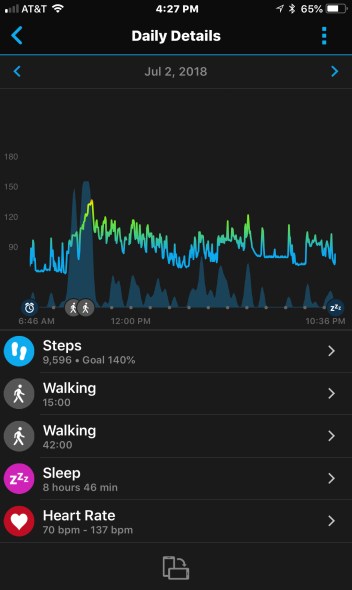 I have a Garmin Vivosmart HR that I use to track my activity. I’ve had some sort of tracking device for years, but it wasn’t until two summers ago that I started using this technology correctly.
I remember getting my very first FitBit. It was the kind you clipped to something. From the minute I first started seeing the numbers, I was hooked. Look at all of those steps. I took 1,000 steps yesterday. Woo hoo! Then, I logged 1,500 the next day. You go girl! The crazy thing is – I wasn’t really increasing my exercise level. I was merely cheering steps I would have taken anyway. Steps to the refrigerator were now exercise. Steps to the living room, a half marathon. Steps to the kitchen table, amazing stuff! Initially I was blown away by all of my “activity.” At the same time I couldn’t understand why I wasn’t seeing any results.
So I joined a group challenge called the “Workweek Hustle.” There were about a half dozen friends and family members in this challenge, competing to see who could log the most steps from Monday through Friday. I am a fairly competitive person so I thought this might be the way to really up my game. Yeah right, think again. I was competing against a nurse who worked 12 hour shifts, the owner of a nursery and garden center and one of my nieces who could seemingly spend hours on the treadmill without batting an eye. I got pummeled in the Workweek Hustle.
After reading several articles about fitness trackers and weight loss, I realized that I would benefit more if I didn’t just focus on number of steps, but also on stepping faster. Eric Finkelstein, Ph.D., lead author of a study on FitBit use, explained, “If you really want to get healthy, you have to engage in brisk walking or running—something sustained.”
Increased exercise needs to be paired with changes in diet to really help you lose weight and improve overall health, Finkelstein added. “You shouldn’t assume that all you need to do is buy one of these devices and suddenly your health is going to improve.” If it was only that easy, I would be at my goal by now. But it’s not. It’s work. It’s sweat dripping from your forehead and down your back work. (At least that’s what it’s like for me.)
So now, with my Garmin and the Garmin Connect app on my phone, I track steps, intensity minutes, heart rate, floors and my weight. The Garmin Connect app syncs with MyFitnessPal, making adjustments to my available calories (when I exercise) so I know how many calories to consume during each day.
Weekly weigh-ins. I weigh once a week to check the progress to my goal. I try not to weigh more than once a week because the daily fluctuation drives me nuts. I try not to go longer than a week before stepping on the scale so that I can better manage any weight gain.
There are a lot of different ways to measure progress to a health goal. I just happen to use the scale.
Since we’re on the topic of the scale, it’s time to share my current status. As you probably already guessed after reading this post’s headline, I weigh 192.6 pounds. In a little over a year, I lost 37.4 pounds. My current body mass index (BMI) is 25.4 which classifies me as “overweight.” I’m no longer in the “obese” category.
What’s not working?
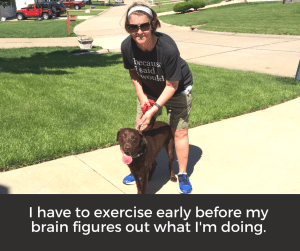 Putting off exercise. I really don’t enjoy exercise. I’m not a runner. I’m not a fan of the gym. I’ve been fairly sedentary this past year. Consequently, knowing myself the way that I do, I try to knock out my cardio first thing in the morning. I look at it like ripping off a bandaid, pulling a tooth or blurting out the obvious. Putting off exercising creates a tortuous situation for me. I get this sense of dread. Anxiety. Eventually I start rationalizing why it makes more sense to exercise later in the day which leads me to not exercise at all. I’ll come up with some reason to NOT do it. It’s too hot. It might rain. It’s getting dark. I have to finish this other thing. I don’t want to miss this really important show on TV. Eventually, I arrive at the granddaddy of all excuses, “It won’t matter if I miss one day of exercise.” Yikes! It’s that kind of thinking that got me where I am today. Overweight. Unhealthy. Every day matters. Every choice matters.
Completely eliminating high-calorie food I enjoy. There are times when I appear to have the palate of a pre-schooler. I love a good fruit snack, piece of candy or cupcake with sprinkles. While these items are not part of my regular food plan, I will occasionally enjoy one of these sweet treats. I log the calories and then make adjustments to my activity level in order to burn those calories.
For me to resolve to never eat another cupcake would be a ludicrous proposition. Get real. With this sweet tooth? Ain’t gonna happen. On my current plan, I can eat anything I want. I just need to account for it. I need to manage the cravings, be mindful of my choices and count the calories.
We’ve reached the finish line with this blog post!
As we reach the end of this post, my thoughts return to you. What are you working on this summer? Any goals you want to share? What challenges have you faced and how did you manage them?
 I paid it forward through the years and taught others to juggle. I taught a few of my siblings. I taught a couple of high school students during a study hall at my first teaching post. These students took their talent to the stage at the school’s first talent show (pictured at left). They started with the bean bags and upped the ante. They juggled bowling pins and a bowling ball. It. Was. Amazing. They brought down the house.
 During the last 30+ years, there have been occasions when I have suffered from “Jogging Juggler” syndrome. During each instance, I wasn’t immediately aware if the syndrome was the result of bad technique or me selecting the wrong objects to juggle. I just know I was so out of whack that I was damn lucky I didn’t drop any balls.
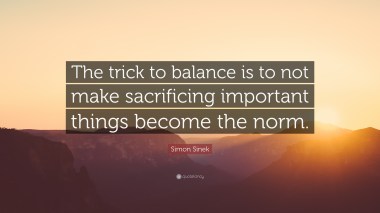 Choosing items carefully is sort of the first step toward achieving balance in our lives, too. We review our priorities. We examine. We decide what will work for us and what will not. We weigh our skills, experience, abilities and VALUES against the requirements of meeting the needs and expectations of all that we’re juggling. The fact of the matter is, we all have different abilities and preferences when it comes to juggling. Some of us can juggle the bowling ball. Some of us can’t. Some of us want to try to juggle the bowling ball. Some of us don’t. It is important to note that achieving balance is not without some sacrifice. If you to choose to juggle a big career and family, for example, you probably need to sacrifice your longtime dream of becoming the next Food Network Star.
 Life After Ted