The Road to 192.6 was Paved with Sweat

dreamsdontworkunlessyou doAfter my June 10, 2017, blog (“Creating a Butter, I Mean Better, Me”) and the pronouncement that I would be embarking on a new path to a healthier self, I thought it might be worthwhile to reflect on this journey on a somewhat regular basis. The point of the reflection would be to identify what’s working and what’s not. I wasn’t going to blog after every moment of reflection. When useful information bubbled up, I intended to scribble it down and post it here. My thought was that my learning could help someone else achieve a goal. Well, we all know what happened there (read my last post for a refresher). A year later and this post still sits in my “drafts” file. Not for long. I’m dragging this bad boy across the finish line if it’s the last thing I do. Hopefully I’ll burn a few calories in the process.

Thankfully I’m in a little better shape than I was a year ago at this time. As a result, while the weight of this unfinished project might be challenging, it’s not impossible. I’m pretty confident I can push and/or pull it to where it needs to go.

Before we go any farther, there is something I want to make clear about my intention with this post. It is my hope that my sharing might push you to share some of your own insights/learnings. I would love to hear from you and for this blog and this journey to be more of a discourse than a monologue. It really doesn’t matter if your goal is different than mine. There’s an African proverb that says, “If you want to go fast, go alone. If you want to go far, go together.” I don’t know about you, but I would like to go far. I want to go the whole way. The entire distance. To the finish line. I think that’s part of what this journey is about – coming together, keeping together and working together. So please, consider joining me. Please think about posting your thoughts, goals or observations in the comments.

If you’d rather not share, no worries. I’m forever grateful and blessed by those who take the time to read this blog. I’m buoyed by the belief that we’re in this together.

What’s worked?

Putting the goal out there in the universe. Almost as soon as the June 10 post went live, I received a ton of well wishes from friends and family members. Incredibly, just a few days in, I felt as though I had this tremendous circle of support. It’s like I had my own little weight-loss cheering section, if you will.

Part of that spirited club of pro-health advocates includes what I refer to as accountability partners. These are the people who have the Herculean task of holding me to account for the goal I’ve proclaimed. They check in on my progress and ask the hard questions. What did you eat for breakfast? What do you plan to eat when you go to that concert? Do you really want to eat those fries when you’ve eaten healthy all day? Have you exercised? Is a cheesy chicken burrito smothered in guacamole and sour cream on your plan? Are you doing what you said you were going to do? Did you weigh this morning? Do you really want that second glass of wine? How far did you walk? Have you thought about weight training?
IMG_9669

I’m not going to lie. I don’t always love the questions or the pushing and prodding by my accountability partners. It’s especially hard when you think you’re doing everything you can and the needle is not moving. At the very beginning, I was in the middle of a full-on plateau. I was vigilant about consuming well under my calorie goal and yet I was not losing weight. On day nine of this torturous journey, the unthinkable happened – I gained a quarter pound! I thought I was going to blow a gasket when I recounted my perceived failure and instead of patting me on the head and handing me a Twinkie one of my accountability partners suggested I amp up the exercise. “I think you need to walk farther and faster. You should also add in more hills.” You. Are. Out. Of. Your. Mind. As the irrational part of my brain imagined punching this accountability partner in the throat and running to the nearest QuikTrip for a taquito and a few five cent Tootsie Rolls, the rational part of my brain knew she was right.

I’m very fortunate that no matter how ridiculous, defensive or annoyed I get, my accountability partners remain focused on doing whatever they can to help keep me on track.  Their significance cannot be overlooked. They are companions on this journey. They’re riding shotgun. They are the copilots. They help manage the GPS. They are the ones who assist in recalculating the route when I’ve veered off course.

After a recent vacation this summer, it came as no real surprise to me that I gained several pounds. When I lamented this reality to a couple of my accountability partners, their responses were similar, “Well you’re back on your plan now, right?”

No matter what your end game, it’s essential to have people around you who are going to applaud your successes AND also call into question occasions when you don’t keep your word where your goal is concerned. You need accountability partners.

Exercise, exercise, exercise. I remember when I was in my 20s, I could start a diet and lose 8 pounds in the first two weeks. That’s not the case anymore. It’s freaking hard work to lose an ounce these days. I am not exaggerating. These pounds are persistent. They have a death grip, literally, on my thighs, butt and belly. They’ve been with me for a couple of years now and they think they know me. They (mistakenly)believe that if they hang around long enough, I’ll give up. I will go back to feeding them Cheetos and Big Macs. Guess what? Ain’t gonna happen. I’ve been attacking the persistent pounds with a variety of cardio AND diet and I think I’ve got the pounds on the ropes. Four of them surrendered last October after losing their grip on a 10-day plateau. Two more of them went packing in July after I kept to my calorie goal and exceeded my exercise goal for an entire week.

I’m committed to exercising every day. I have to be in order to achieve my goal. I have to I walk my dog, Moose. I must ride my bike. I need to do the treadmill. I sometimes plank and do some band work while I’m binge-watching Netflix or Law and Order reruns. I have to go the extra mile. I can’t sit around. Healthy eating alone will not get me to where I want to be. Exercise. Exercise. Exercise.

Planning ahead. I’ve been on the road a lot the last couple of weeks, visiting family members and reconnecting with friends over lunch and dinner. In order to stay on plan, I have to plan. I check out restaurant menus in advance so I know my options. I bring food or dressing or drink when necessary. I remind people of my journey. I’m very direct in asking for their support.

I don’t, rather, I can’t leave the food or opportunities to exercise to chance. Why? Because I know my weaknesses. I can’t, for example, sit and watch other people eat tortilla chips, salsa and guacamole. That’s just not in my DNA. I’m not that evolved or in control just yet. So I try to steer away from places or menus that feature foods I have not learned to say “no” to, like chocolate layer cake or chicken parmigiana.

A couple of weeks ago I spent a few days in Phoenix with extended family. Before the trip, one of my brothers, who was also going, asked me if I intended to stick to my plan. I said yes and he offered to do some shopping for me. So I sent him a list of fruit and low-calorie frozen meals. Everyone was so supportive of my choice to try to stay on plan. Not once did I hear, “Oh come on – you’re on vacation.” It helped to have a few of my accountability partners vacationing with me.

Journaling all food and activity. One of the key words for me in the preceding sentence is “all.” I account for everything that goes in my mouth and every bit of activity that I do where I actually break a sweat.

I use the MyFitnessPal app to log my food. And I log it all. Today, I grabbed a handful of pretzel thins. Before I ate them, I counted them and logged them. Last night, I dished up some berry crisp for my husband. I topped his sweet treat with Cool Whip and proceeded to lick the spoon. I logged those calories, too. It may sound a bit obsessive, logging every tidbit or morsel – however small, but the reality is I arrived at 230 pounds by not accounting for what was going in my mouth. It was just a bite. A taste.
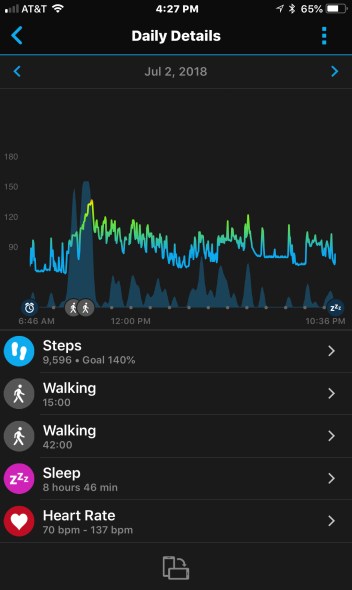
IMG_6673I have a Garmin Vivosmart HR that I use to track my activity. I’ve had some sort of tracking device for years, but it wasn’t until two summers ago that I started using this technology correctly.

I remember getting my very first FitBit. It was the kind you clipped to something. From the minute I first started seeing the numbers, I was hooked. Look at all of those steps. I took 1,000 steps yesterday. Woo hoo! Then, I logged 1,500 the next day. You go girl! The crazy thing is – I wasn’t really increasing my exercise level. I was merely cheering steps I would have taken anyway. Steps to the refrigerator were now exercise. Steps to the living room, a half marathon. Steps to the kitchen table, amazing stuff! Initially I was blown away by all of my “activity.” At the same time I couldn’t understand why I wasn’t seeing any results.

So I joined a group challenge called the “Workweek Hustle.” There were about a half dozen friends and family members in this challenge, competing to see who could log the most steps from Monday through Friday. I am a fairly competitive person so I thought this might be the way to really up my game. Yeah right, think again. I was competing against a nurse who worked 12 hour shifts, the owner of a nursery and garden center and one of my nieces who could seemingly spend hours on the treadmill without batting an eye. I got pummeled in the Workweek Hustle.

After reading several articles about fitness trackers and weight loss, I realized that I would benefit more if I didn’t just focus on number of steps, but also on stepping faster. Eric Finkelstein, Ph.D., lead author of a study on FitBit use, explained, “If you really want to get healthy, you have to engage in brisk walking or running—something sustained.”

Increased exercise needs to be paired with changes in diet to really help you lose weight and improve overall health, Finkelstein added. “You shouldn’t assume that all you need to do is buy one of these devices and suddenly your health is going to improve.” If it was only that easy, I would be at my goal by now. But it’s not. It’s work.   It’s sweat dripping from your forehead and down your back work. (At least that’s what it’s like for me.)

So now, with my Garmin and the Garmin Connect app on my phone, I track steps, intensity minutes, heart rate, floors and my weight. The Garmin Connect app syncs with MyFitnessPal, making adjustments to my available calories (when I exercise) so I know how many calories to consume during each day.

Weekly weigh-ins. I weigh once a week to check the progress to my goal. I try not to weigh more than once a week because the daily fluctuation drives me nuts. I try not to go longer than a week before stepping on the scale so that I can better manage any weight gain.

There are a lot of different ways to measure progress to a health goal. I just happen to use the scale.

Since we’re on the topic of the scale, it’s time to share my current status. As you probably already guessed after reading this post’s headline, I weigh 192.6 pounds. In a little over a year, I lost 37.4 pounds. My current body mass index (BMI) is 25.4 which classifies me as “overweight.” I’m no longer in the “obese” category.

What’s not working?
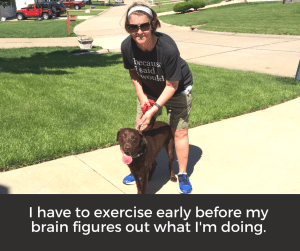
Random thoughts from the trail...Putting off exercise. I really don’t enjoy exercise. I’m not a runner. I’m not a fan of the gym. I’ve been fairly sedentary this past year. Consequently, knowing myself the way that I do, I try to knock out my cardio first thing in the morning. I look at it like ripping off a bandaid, pulling a tooth or blurting out the obvious. Putting off exercising creates a tortuous situation for me. I get this sense of dread. Anxiety. Eventually I start rationalizing why it makes more sense to exercise later in the day which leads me to not exercise at all. I’ll come up with some reason to NOT do it. It’s too hot. It might rain. It’s getting dark. I have to finish this other thing. I don’t want to miss this really important show on TV.  Eventually, I arrive at the granddaddy of all excuses, “It won’t matter if I miss one day of exercise.” Yikes! It’s that kind of thinking that got me where I am today. Overweight. Unhealthy. Every day matters. Every choice matters.


Completely eliminating high-calorie food I enjoy. There are times when I appear to have the palate of a pre-schooler. I love a good fruit snack, piece of candy or cupcake with sprinkles. While these items are not part of my regular food plan, I will occasionally enjoy one of these sweet treats. I log the calories and then make adjustments to my activity level in order to burn those calories.

For me to resolve to never eat another cupcake would be a ludicrous proposition. Get real. With this sweet tooth? Ain’t gonna happen. On my current plan, I can eat anything I want. I just need to account for it. I need to manage the cravings, be mindful of my choices and count the calories.

We’ve reached the finish line with this blog post!

As we reach the end of this post, my thoughts return to you. What are you working on this summer? Any goals you want to share? What challenges have you faced and how did you manage them?

The Importance of Balance as We Juggle Our Way Through Life

I can juggle. I picked up this now seemingly defunct talent when I was in college. No, I didn’t take a juggling class. One of my roommates taught me using three little bean bags. It actually was a fairly easy skill to pick up. And, it was fun.

A couple of other college friends learned to juggle, too. Occasionally, we would juggle together. We figured out how to do a few easy tricks – like passing the bean bags between two people. We would spend hours laughing and juggling – when we weren’t studying our brains out, of course.

FullSizeRenderI paid it forward through the years and taught others to juggle. I taught a few of my siblings. I taught a couple of high school students during a study hall at my first teaching post. These students took their talent to the stage at the school’s first talent show (pictured at left). They started with the bean bags and upped the ante. They juggled bowling pins and a bowling ball. It. Was. Amazing. They brought down the house.

I never tried to juggle a bowling ball. The idea of juggling something that big and heavy stressed me out. What if I dropped it? I might hurt myself. I might hurt others. I might hurt the bowling ball.

It’s been 30+ years since I tossed that first bean bag and guess what? I’m still juggling. You may not realize it, but you’re juggling, too. The balls we are working to keep in the air aren’t bean bags, though. These balls are things like family, friends, health, integrity and work.

When you first learn to juggle, you start with one item. Once you master one thing, you add one. Most folks become experts at tossing two items in a matter of minutes. It can take hours, days and even weeks for a newbie to feel confident with three. But once you’ve got three down, you can continue to add items, depending on your interest and comfort level.

That’s sort of how you learn to navigate life. Right? You start out with a single focus and as you get older, and gain more confidence, skill and experience, you start grabbing for more balls.

It isn’t always easy to keep these balls moving, especially when one of them becomes weightier than the others. We struggle. We do our best. Sometimes, we ask for help. On rare occasions, we check into the possibility of getting a smaller ball. More often than not, however, we deny the reality that it has become too much to handle and we just keep juggling.

Have you ever seen someone struggle to juggle? There’s actually a term for this. It’s called the “Jogging Juggler” syndrome.” He or she tosses a ball and it sort of goes forward a little bit. So the juggler runs in that direction in an effort to keep the ball from hitting the floor. And because the juggler is leaning in one direction it becomes next to impossible to make a course correction and toss the ball straight up. So now he or she is running again. The more the juggler runs, the more he or she sweats. And you, in your empathy, start sweating too. You want to help this poor juggler. Sometimes they will let you. They will quickly and temporarily toss a ball to you. Or they will ask for your advice or insight. How high should I throw that? Why did that one go so far to the right? Where is that ball?

But, there are those who will disavow the notion that they might be in trouble. And so you watch in semi-horror and bite your nails. Or, you cover your eyes because you know eventually a ball will drop and you can’t bear to see the juggler’s look of disappointment. The defeat.

out-of-balanceDuring the last 30+ years, there have been occasions when I have suffered from “Jogging Juggler” syndrome. During each instance, I wasn’t immediately aware if the syndrome was the result of bad technique or me selecting the wrong objects to juggle. I just know I was so out of whack that I was damn lucky I didn’t drop any balls.
What’s interesting is that in spite of the enormous and obvious chaos, stress and mess that the syndrome caused, I was one of the last people to realize I had it. I was the last to accept the diagnosis even though my family, friends and colleagues could see the tell tale signs (taken from “10 signs Your Work-Life Balance is Out of Whack.”)

  • You’re always too busy.
  • You’re always tired.
  • You’re out of shape.
  • Your desk is a mess.
  • You can’t unplug.
  • You’re a no show at social events.
  • You work 24/7.
  • You’re crabby with a capital C-R-A-B-B-Y.

In the real world, we don’t talk about people with the aforementioned symptoms as having “Jogging Juggler” syndrome. Let’s be real. The whole juggling thing was just a metaphor to get us to this point – where we discuss the real gist of this blog post – the significance of work-life balance.

According to Shawn M. Burn, Ph.D., professor of psychology at California Polytechnic State University at San Luis Obispo, “work-life balance is important because it affects the well-being of individuals, families, and communities. After all, people need time and energy to participate in family life, democracy, and community activities. They also need time outside of work for rejuvenation, and to develop and nurture friendships and their ‘non-work selves.'”

How one’s balance is structured may vary from person to person, depending on the individual and his or her preferences, background, family life, neighborhood, financial status, priorities, etc. But long story short, when we’re in balance, we’re happy and confident. We feel a sense of ease and harmony in our individual worlds.

That’s not to say it’s all rainbows and unicorns. There are always challenges and hardships in life. When we’re in balance, however, conflict can momentarily shake our foundation,  but we are able to course correct. We do so by asking for help. We pass a ball to a friend, a spouse a colleague. We prioritize. We make tough decisions. Sometimes reality demands that we drop a ball.

Bryon J. Dyson, former CEO of Coca Cola, gave a commencement speech at Georgia Tech in 1996. He began his address with his vision of balance and what happens when you drop a ball:

“Imagine life as a game in which you are juggling some five balls in the air. You name them – work, family, health, friends and spirit … and you’re keeping all of these in the air.

You will soon understand that work is a rubber ball. If you drop it, it will bounce back. But the other four balls – family, health, friends and spirit – are made of glass. If you drop one of these, they will be irrevocably scuffed, marked, nicked, damaged or evenshattered. They will never be the same. You must understand that and strive for balance in your life.”

You can revise this vision depending on your priorities and values, I suppose. If you love, love, love your work, for example, career might become one of your glass balls. The choice is yours.

Some people dispute the very notion of balance. They say it’s an elusive dream. It’s hogwash. A fairytale. A big fat lie. Don’t worry about it, they say. And certainly don’t strive to achieve it because you never will. It doesn’t exist, remember?

But here’s the deal: telling someone who feels overwhelmed by the responsibilities and people and life they are juggling, “There is no reason to feel overwhelmed,” is not helpful. (Spoiler alert: Dismissing a person’s feelings is never helpful.)

Moreover those who assert, “There is no such thing as balance,” exacerbate the problem for those who are struggling – by delegitimizing their feelings AND communicating a harsh untruth: You’re not unbalanced, you’re just less than. Less capable, less smart, less skilled.

When someone is struggling to juggle, we need to lend a hand, not toss another ball – or replace an already unmanageable ball with a bigger one. Do that, and we’re back to “Jogging Juggler” syndrome. We’re chasing MORE balls, our tails, pavements, rainbows, etc.

In defense of the nonbelievers, it has been my experience that they have a blindspot where balance is concerned. That blindspot occurs for one of three reasons: 1) They are rock stars when it comes to juggling. They can juggle multiple items, bowling balls, fire – you name it – they can juggle it. 2) They can compartmentalize when it comes to putting a ball down or dropping a ball. It’s just what has to happen. It’s not a sacrifice. It’s part of life. Next! 3) Their values are different from those who believe in the significance of balance – meaning balance just ain’t their thing.

One of the first steps in learning to juggle is to choose your items very carefully. Check the weight of the item. It shouldn’t be too heavy or too light. Consider its shape. Can you manage it?

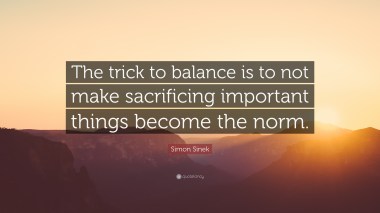
537721-Simon-Sinek-Quote-The-trick-to-balance-is-to-not-make-sacrificingChoosing items carefully is sort of the first step toward achieving balance in our lives, too. We review our priorities. We examine. We decide what will work for us and what will not. We weigh our skills, experience, abilities and VALUES against the requirements of meeting the needs and expectations of all that we’re juggling. The fact of the matter is, we all have different abilities and preferences when it comes to juggling. Some of us can juggle the bowling ball. Some of us can’t. Some of us want to try to juggle the bowling ball. Some of us don’t. It is important to note that achieving balance is not without some sacrifice. If you to choose to juggle a big career and family, for example, you probably need to sacrifice your longtime dream of becoming the next Food Network Star.

“The trick to balance is to not make sacrificing important things become the norm.” – Simon Sinek.

The privilege in the preceding is not lost on me. I fully understand that some people are handed the balls they are going to have to juggle. They don’t have a choice. They can’t find anyone who will help them. On the contrary, while they are juggling 24/7 they also have to guard against people who are swatting at their glass balls in the air. They have to figure out a way to steady themselves while others are pulling at the rug on which they are standing. They feel as though they are juggling bowling balls on a treadmill in a tornado. We have to figure out a way to lighten this load. To provide respite. To create opportunities. I’m clear about this.

A wise juggler once said that nobody ever teaches someone how to juggle; they simply show someone how to teach themselves. Through trial, error, training and example, I’ve learned how and what I’ll juggle. I’m guessing you have, too.

Some of us will juggle bowling balls. Some of us won’t.

If you ever need a hand with what your juggling, let me know. I’m happy to lend a hand.

So – what do you think about work-life balance? Do you agree with Dyson’s assertion that work is the rubber ball? Please share your thoughts in the comments!

Playing My Cards Right

fullsizerender-11Take a look at the picture on the left and tell me what you see. A beautiful stack of greeting cards, right? That’s what I see, too.
A couple of weeks ago, my husband, Jeff, saw me sitting at the table with said stack of greeting cards and shook his head. He didn’t say anything mind you, but sometimes body language speaks louder than words. Believe me, I heard his head shake loud and clear. The implication was that I have a problem.

Full disclosure, the head shake could have been directed at any number of things. Perhaps it was meant for our crazy dog, Moose, who can’t seem to get a drink from his bowl without proceeding to water the entire kitchen floor. It’s like his mouth is numb from some kind of canine dental treatment. The water just flows off the edges of his gums. Or maybe the head shake was Cardinals, Rams or Blues related. Jeff is a huge fan of all things St. Louis sports. So maybe the head shake was because the Cardinals didn’t make the playoffs. It’s possible. I don’t really know. I didn’t even ask. I just assumed it was meant for me.

And if it was meant for me, it might have been warranted. You see, I have A LOT of greeting cards. I don’t know exactly how many I have. Let’s just say that the above photo shows a fraction of my inventory. Let’s also just say that I probably shouldn’t buy another birthday card this year. Probably shouldn’t buy a thank you card, either. Or, a “Just for Fun” card. Or, a “I’m Thinking of You” card. Or a “Blank Card.” Or a card of “Encouragement.” But I know myself pretty well. I will buy more cards. I will add to the pile.

In my defense, I buy my cards at Trader Joe’s. If you’ve ever perused the greeting cards at Trader Joe’s, you probably understand my obsession. They are beautiful. They are unique. And, they are 99 cents each! Are you kidding me? It’s one of those deals I just can’t refuse. Ever. Never.

In fact, each time I make the trek to Trader Joe’s, I buy more cards. I could be running in for a bottle of three buck Chuck and a box of Joe Joe’s and you know I will snatch up a couple of greeting cards at the checkout. I can’t help it.

It. Just. Happens.

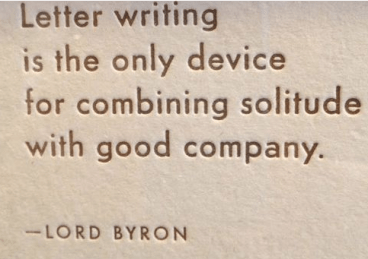
letter-writingIt just happens because I love to send hand-written notes in beautiful greeting cards. And I want to make sure when I’m sending a card that it assists in accurately and adequately communicating my thoughts, feelings and intentions. In order to accomplish the preceding, I must have the right cards for all possible occasions. The image on the front has to be right. The words on the front have to be right. The words on the inside have to be right.

I have made a few mistakes when purchasing cards. Consequently, some cards at the bottom of the pile have been in my collection for years. For example, I have a blank card that has a gorgeous monarch butterfly on the outside. The following quote frames the picture, “Just when the caterpillar thought its world was ending, it blossomed into a Butterfly.” I loved this card when I initially purchased it. However, every time I reach for it, I return it to the pile. I worry what the recipient might think I’m implying. Will the recipient think he or she is a caterpillar? That they have yet to blossom? That their world is ending? My intention might be to send a word of encouragement and the end result could be to offend or frighten. So, yeah, I haven’t used the caterpillar card yet.

You can’t tell by looking at the pile, but in the last few months I’ve mailed a lot of cards. Sadly, the majority have been of the sympathy variety. The sympathy card, in my mind, is the most important card to get right. It also appears to be the one that most greeting card manufacturers get wrong the majority of the time.

The last time I looked for a sympathy card, I ended up purchasing a blank card because the sympathy cards’ messages were definitely not right. One said something about the spirit of the deceased loved one living on in everyone’s hearts. Another urged “be strong” and “this will pass with time.” And then there was the cheesy and thoughtless “when someone you love becomes a memory the memory becomes a treasure.” What does that even mean?

My perspective around sympathy cards has been shaped in large part by my experience more than 20 years ago when my brother, David, died.

David’s death came a little more than a year after a cancer diagnosis and months of treatment to include intensive chemotherapy, a double bone marrow transplant and radiation. About 10 months following his diagnosis, testing and scans revealed David was cancer-free. But the cancer came back.

David was young, happily married and a father of two young girls at the time of his death.

I empathize with those who came to pay their respects at David’s visitation and funeral. I know they were looking for just the right words to make everything better. So were the kind folks who sent sympathy cards. This may sound crazy – especially coming from a writer – but there were no words that could have made things better. None. Not “I know how you feel.” Not “he’s in a better place.” Not “he’s no longer in pain.” And not “time heals all wounds.”

The only message that resonated with me at that time was, “This really sucks.” And, I don’t think you could have found that missive in a greeting card.

So I buy blank cards to send to family and friends who have experienced the death of a loved one. I write my own message. That message is simple. I care. I’m really sorry. And if merited, I add, “This really sucks.”

Want to read more about the “Art of Condolence?” Click here for more.


New Blog! Read Now and Avoid the Lines

I was waiting in line at a drive-thru restaurant yesterday morning, after waiting in line at the bank, and suddenly it occurred to me, I spend a lot of time waiting in line. Or so it seemed. Curious – I pulled out my phone and Googled, “How much time do people spend waiting in line?”

Picture from www.dailymail.co.uk. In Longview, Texas, trucks and SUVs spilled out of the parking lot and lined the streets, waiting to get into the drive-through for Chick-fil-A.
Picture from http://www.dailymail.co.uk. In Longview, Texas, trucks and SUVs spilled out of the parking lot and lined the streets, waiting to get into the drive-through for Chick-fil-A.

I was stunned when I read that over the course of a lifetime, the average American will spend TWO years waiting in line. TWO YEARS. Americans as a whole spend roughly 37 BILLION hours each year waiting in line. Mind blowing, isn’t it?

More surprising than the numbers though, was the discovery of M.I.T. operations researcher, Richard Larson. According to an article I read in the New York Times, “Why Waiting in Line is Torture,” Larson is widely considered to be the foremost expert on lines. Did you know there was an expert on lines? I didn’t.

There appears to be an entire science around lines. I guess that’s not all that astounding given today’s culture. We live in a microwave society. We want what we want and we want it now. We order our lunch from the company who promises a “freaky fast” delivery. We download the Waze app to save time on our daily commute. We pay extra for “express boarding” when we travel by air. We read stories like, “Why Waiting in Line is Torture,” hoping the moral of the story will reveal some new trick for avoiding lines. We don’t want to wait. Not in line. Not online.

As a matter of fact, according to computer scientist Ramesh Sitaraman, waiting of any sort can mean high anxiety for Internet users. Sitaraman’s research found that two seconds is the longest we’ll wait for an online video to load before we start looking at our watches. If we have to wait 10 seconds, 50 percent of us are going to bail. Apparently, we can’t spare that kind of time.

Why do we hate waiting in line so much? For the answer to that question, we return to the line expert, Professor Larson. He explained, in an article in The Huffington Post, “The Hidden Joy of Waiting in Line,” that occupied time feels shorter than unoccupied time, so when we’re standing in a long line or in a doctor’s office waiting room, the time feels as if it’s dragging on. Waiting can provoke impatience, stress and anxiety, and in turn, anxiety also makes waits seem longer.

“The dominant cost of waiting is an emotional one: stress, boredom, that nagging sensation that one’s life is slipping away,” Alex Stone wrote in the New York Times in 2012.

Apparently, the mere presence of a line can freak people out. So it stands to reason that multiple lines can really push people over the edge, right? That statement is true – but not for the reason you might think. The presence of multiple parallel lines, like the ones we see in the grocery store, create an anxiety because we are pressured to pick the right one – the line that will get us through the checkout and out of the door the quickest.

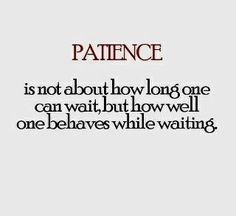
patienceWe’ve all been there. I was there last weekend. Pressed for time, I was trying to get in and out of Costco in rapid fashion. I was doing a fantastic job, until I reached the checkout area and had to decide on a line. Before I could choose, there were several factors I needed to consider: the number of people in each line, the quantity of items in each cart, and the chattiness of the employees. Once I selected my line, I then spent the rest of my time waiting, comparing my wait to those in the adjacent lines. Am I beating that line? Am I losing to that one? I can probably beat all of the lines as long as nothing unforeseen happens – like a price check.

Weirdly, I don’t remember if I won or lost, because at the end of my shopping experience, the clerk helped me find a box to carry all of my purchases and a couple of my items rang up at lower prices than I anticipated. According to the line experts, my inability to remember the details of the race wasn’t so weird. The experts assert that when a long wait ends positively, we tend to forget all about the trauma of waiting. The reverse is true as well. If our experience ends on a down note, we will fixate on that negative story even if the whole process wasn’t that bad.

We’ve all been there, too, haven’t we? I remember not too long ago running into the post office to mail a few packages for work. I had a pile of brightly colored boxes I was sending to some folks who’d helped me out with a video shoot. The line moved quickly and the clerk was quite pleasant and helpful. When it was time to pay I handed the clerk my credit card, he processed my payment, returned the card and then mispronounced my last name. Instead of Daum he said Dum. Game over.

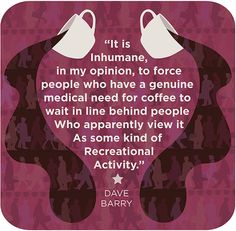
david barryOne of the biggest factors in how we perceive our line waiting experience boils down to fairness. It goes without saying (but I have to say it here because this is a blog and this is where I say stuff), the first one to get in line is the first one to be served. Anyone who colors outside of the lines of first come, first served, is asking for trouble.  Isn’t one of the earliest rules we all learn when it comes to line etiquette is that there are no cuts?

These new drive-thru lines, that split in two and then converge into one, sometimes make the first come, first served rule a challenge. Just last week I was sitting in a line ahead of the split and some guy drove next to me, almost on the sidewalk, and maneuvered ahead in one of the lines. I had this “Fried Green Tomatoes” moment flash in my head where I drove my little Prius into the side of his Escalade. Thankfully that inclination left as quickly as it came and I maintained my composure.

But maintaining one’s composure when someone cuts in line is easier said than done for some folks. There’s an ABC 20/20 piece about “line rage” that showcases throwdowns in the men’s room at a professional sporting event, at an Apple new product unveiling and a convenience store. There’s actual footage of a woman getting so enraged when a guy tries to cut in front of her to buy cigarettes that she maces him. Google “muffin macer” and you can find that stress-filled encounter starring two adults behaving poorly.

Helping people avoid these kinds of experiences and the stress of lines are professional line sitters. Robert Samuel launched SOLD (Same Ole Line Dudes) in 2013 in New York. Samuel makes a living sitting in line for everything from Saturday Night Live tickets to cronuts. He charges $60 to wait in line and then deliver two ($5/each) cronuts to customers who don’t want to wait in crazy long lines at Soho’s Dominique Ansel Bakery.

Shared from the QLess Facebook page.

And then, there’s Alex Backer. Backer is co-founder and CEO of QLess.

Operating on the principle that “waiting in line sucks,” QLess aims to “eliminate waiting in line from the face of the earth.” QLess is based in Los Angeles, which I suppose makes a lot of sense. If your mission is to eliminate lines you headquarter where there are a lot of people and a lot of lines, right?

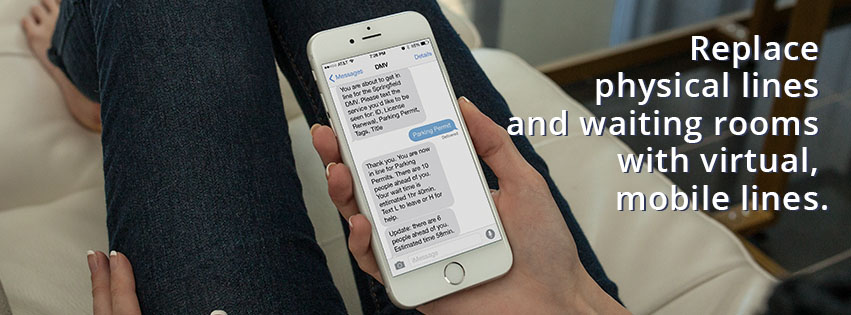
Founded in 2007, QLess offers a technology that holds your spot in a virtual line and notifies you on your mobile phone when it’s your turn. According to QLess, the company “has a proven track record at Fortune 100 retail stores such as T-Mobile, Vodafone & Harrah’s, government offices such as Kansas, Missouri and New Hampshire DMVs or the City of Austin, restaurants such as Twin Peaks, and healthcare providers such as the Cleveland Clinic.”

I don’t know about you, but I don’t have the resources to pay other people or technology to wait in line for me. Instead, I’m just going to have to suck it up, act like an adult and make the best of waiting. Spoiler alert – so are you.

P.S. My Google search turned some other interesting facts I thought about using in a later blog post – but hey – why make you wait? From the website Distractify, I found the following interesting tidbits about how we spend our time. (Disclaimer: I have no idea how accurate any of these things are. I just found them interesting.)

  1. We watch TV for 9.1 years.
  2. We spend two years watching commercials.
  3. Women spend 17 years of their lives trying to lose weight.
  4. We spend 92 days on the toilet.
  5. We spend 25 years sleeping.

Dancing Down Memory Lane

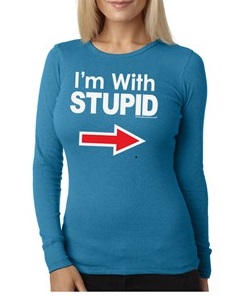
stupid-shirt-irtI was putting gas in my car over the weekend, when I looked up and saw a woman wearing a shirt that said, “I’m with stupid,” like the one pictured at right. My first thought was to grab my phone and take a picture. I wanted to immediately share this visual with my siblings. It would be a wildly funny text. An inside joke. But, given that the woman wearing the shirt was standing like, four feet in front of me, I fought the paparazzi impulse and returned to my car.

Thankfully, my son, David was in the passenger seat. So I went into storytelling mode, hoping my enthusiastic sharing of memories, would feel as good as snapping a picture and texting the details.

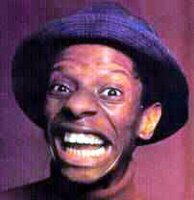
JimmieWalker2You see, I’ve seen this shirt before – on one of my siblings. In fact, I think I played a role in selecting the shirt for said sibling’s wardrobe. If that wasn’t bad enough, I recall adding a J.J. Walker hat to complete the look. It’s true. There’s a perfectly logical explanation for this. I mean, it seems logical to me. You might think it’s a little bit cuckoo. Off center. Not that funny.

Anyway, when I was in seventh grade, I was responsible for watching my three youngest siblings while my mom was at work. My only charge was to make sure they didn’t get hurt. Sounds simple enough, right? Yeah, well – it was far from simple for this nervous Nelly. (Refer to my blog post, “It’s Just a Rash,” for more on my worrisome ways.) You see, we’re talking about ensuring the safety of a little brother, who at age 2, fell and hit his head on an iron planter. In front of a seasoned babysitter. While my mom was still in the house. The subsequent gash on his head required several stitches. This same brother also slipped and fell playing dodge ball at school once. A trip to the doctor on that occasion revealed a mild concussion. We’re also talking about corralling a younger sister, who at around age 4 was supposed to be napping when she removed the chimney from a metal dollhouse and gave herself a “shot” in the knee. Can you say four stitches? So you see, in reality, there was nothing at all simple about this task.

What to do? What to do? Cover them with bubble wrap? Lock them in their rooms?

Initially, I had no idea. Literally, none. Nada. Zero. For many of you younger folks, this will be a difficult concept to grasp. You’re probably thinking to yourselves, “Hello? Disney Channel!” But we’re talking 25+ years ago, well before JessiePhineas and Ferb, iPads, cell phones, Nintendos, etc. We were still writing on slate. Not really. I think we had pens and paper. We definitely didn’t have a home computer, nor the Internet. So I couldn’t just browse a few “Ideas for Keeping Young Siblings Busy” boards on Pinterest. And there definitely wasn’t an opportunity to Google, “how to occupy young children until mom comes home.”

I was stumped.

We didn’t have cable TV. DVR technology was not yet invented. So I couldn’t even rely on the hypnotic effects of the boob tube. After one episode of Gilligan’s Island and maybe a few minutes of Zoom, the natives would start getting restless.

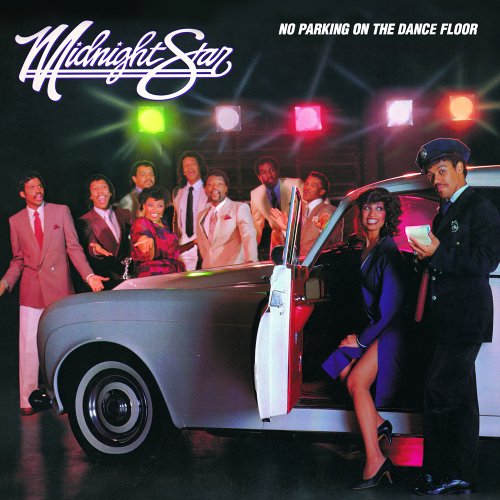
midnight starLong story short, it was completely up to me to develop a creative strategy to keep my siblings busy and safe. It’s a scary thought, but I had to rely on my own pea brain for the precise approach. I don’t know where I came up with this idea, but when they were around first and second grade, I decided I would make them dance. I would choreograph some basic routines to tunes by the Bee Gees, Heatwave, Midnight Star or whatever other 45s I had laying around, teach them the moves and then make them rehearse over and over and over again until the clock struck 5:30 p.m. or my mom got home – whichever came first.

In retrospect, this was a pretty good method for keeping three kiddos in line, for two main reasons. First, because I made sure every dance was a group effort, no one was wandering off doing who knows what sort of dangerous thing. There would be no running around with scissors or crossing one’s eyes (because you know they can freeze that way). Second, because I didn’t really know what the heck I was doing, the technical difficulty of the dances was close to a 1 or 2. There were no jumps or lifts or splits and therefore very little risk for injury. Phew!

For whatever it’s worth, my younger siblings were pretty good performers. One year, they took their routine on the road and performed in the school talent show. That’s when they wore the J.J. Walker hats and the silly t-shirts. (In my defense, I had no budget. And I never claimed to be a costume designer or stylist. I was a simple choreographer.)

Anyway, they did really well in the show. I think they came in second to a kid telling jokes with a bag over his head (he called himself the Unknown Comic).

Everyone loved watching them dance, especially my mom. On occasion, my siblings would perform their latest dance routine as soon as my mom got home from work. She loved every moment of these performances. Loved. Loved. Loved them. I used her joy to my advantage. Every once in a while, when these little dancers tried to opt out of learning a new routine, or complained about being too tired, I would bring the ugly big sister pressure, “So you know how much mom loves to see you dance. And you’re telling me you seriously don’t want to be part of that? Mom works soooooooooooooo hard and you don’t want to bring a smile to her face with this dance? Really?” Makes me cringe just typing the preceding. But it usually worked. Guilt was a beautiful thing for this then stressed out teen. Ugh. I think I owe my siblings an apology.

It was at this point in my story telling that I glance over at David and observe that he has this blank look on his face. I couldn’t tell if he was horrified – wondering if his fate would at some point place him on the dance floor when he’d rather be playing a game of Minecraft. Or perhaps he was in disbelief – doubting my assertion that when I grew up we didn’t have iPads, Nintendos or cellphones. I asked him to share his thoughts and his response was simple, “That’s really weird, mom.”

Yeah, it probably was really weird. But it was also quite fun. There was a lot of laughter in between the introduction of each new dance step. And again, it met my ultimate goal. It kept them safe.

memory lane 2jpgYou see, you’ll do just about anything to protect and care for the people you love. You’ll dance. You’ll choreograph. You’ll have your creative differences. You’ll compromise. You’ll do the best you can with the knowledge and experience you have at the time. You’ll do better as you get older. You’ll apologize when you fall short.

And, you’ll smile when you see someone wearing a shirt that says, “I’m with stupid,” because it will remind you of the people you love – people who in spite of all of your weirdness always love you right back.