The Road to 192.6 was Paved with Sweat

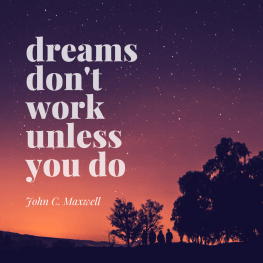
dreamsdontworkunlessyou doAfter my June 10, 2017, blog (“Creating a Butter, I Mean Better, Me”) and the pronouncement that I would be embarking on a new path to a healthier self, I thought it might be worthwhile to reflect on this journey on a somewhat regular basis. The point of the reflection would be to identify what’s working and what’s not. I wasn’t going to blog after every moment of reflection. When useful information bubbled up, I intended to scribble it down and post it here. My thought was that my learning could help someone else achieve a goal. Well, we all know what happened there (read my last post for a refresher). A year later and this post still sits in my “drafts” file. Not for long. I’m dragging this bad boy across the finish line if it’s the last thing I do. Hopefully I’ll burn a few calories in the process.

Thankfully I’m in a little better shape than I was a year ago at this time. As a result, while the weight of this unfinished project might be challenging, it’s not impossible. I’m pretty confident I can push and/or pull it to where it needs to go.

Before we go any farther, there is something I want to make clear about my intention with this post. It is my hope that my sharing might push you to share some of your own insights/learnings. I would love to hear from you and for this blog and this journey to be more of a discourse than a monologue. It really doesn’t matter if your goal is different than mine. There’s an African proverb that says, “If you want to go fast, go alone. If you want to go far, go together.” I don’t know about you, but I would like to go far. I want to go the whole way. The entire distance. To the finish line. I think that’s part of what this journey is about – coming together, keeping together and working together. So please, consider joining me. Please think about posting your thoughts, goals or observations in the comments.

If you’d rather not share, no worries. I’m forever grateful and blessed by those who take the time to read this blog. I’m buoyed by the belief that we’re in this together.

What’s worked?

Putting the goal out there in the universe. Almost as soon as the June 10 post went live, I received a ton of well wishes from friends and family members. Incredibly, just a few days in, I felt as though I had this tremendous circle of support. It’s like I had my own little weight-loss cheering section, if you will.

Part of that spirited club of pro-health advocates includes what I refer to as accountability partners. These are the people who have the Herculean task of holding me to account for the goal I’ve proclaimed. They check in on my progress and ask the hard questions. What did you eat for breakfast? What do you plan to eat when you go to that concert? Do you really want to eat those fries when you’ve eaten healthy all day? Have you exercised? Is a cheesy chicken burrito smothered in guacamole and sour cream on your plan? Are you doing what you said you were going to do? Did you weigh this morning? Do you really want that second glass of wine? How far did you walk? Have you thought about weight training?
IMG_9669

I’m not going to lie. I don’t always love the questions or the pushing and prodding by my accountability partners. It’s especially hard when you think you’re doing everything you can and the needle is not moving. At the very beginning, I was in the middle of a full-on plateau. I was vigilant about consuming well under my calorie goal and yet I was not losing weight. On day nine of this torturous journey, the unthinkable happened – I gained a quarter pound! I thought I was going to blow a gasket when I recounted my perceived failure and instead of patting me on the head and handing me a Twinkie one of my accountability partners suggested I amp up the exercise. “I think you need to walk farther and faster. You should also add in more hills.” You. Are. Out. Of. Your. Mind. As the irrational part of my brain imagined punching this accountability partner in the throat and running to the nearest QuikTrip for a taquito and a few five cent Tootsie Rolls, the rational part of my brain knew she was right.

I’m very fortunate that no matter how ridiculous, defensive or annoyed I get, my accountability partners remain focused on doing whatever they can to help keep me on track.  Their significance cannot be overlooked. They are companions on this journey. They’re riding shotgun. They are the copilots. They help manage the GPS. They are the ones who assist in recalculating the route when I’ve veered off course.

After a recent vacation this summer, it came as no real surprise to me that I gained several pounds. When I lamented this reality to a couple of my accountability partners, their responses were similar, “Well you’re back on your plan now, right?”

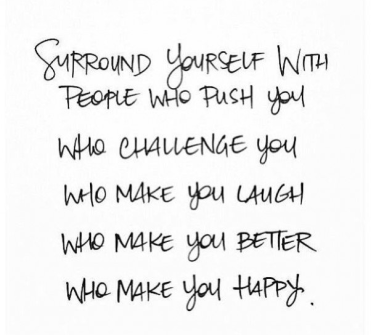
No matter what your end game, it’s essential to have people around you who are going to applaud your successes AND also call into question occasions when you don’t keep your word where your goal is concerned. You need accountability partners.

Exercise, exercise, exercise. I remember when I was in my 20s, I could start a diet and lose 8 pounds in the first two weeks. That’s not the case anymore. It’s freaking hard work to lose an ounce these days. I am not exaggerating. These pounds are persistent. They have a death grip, literally, on my thighs, butt and belly. They’ve been with me for a couple of years now and they think they know me. They (mistakenly)believe that if they hang around long enough, I’ll give up. I will go back to feeding them Cheetos and Big Macs. Guess what? Ain’t gonna happen. I’ve been attacking the persistent pounds with a variety of cardio AND diet and I think I’ve got the pounds on the ropes. Four of them surrendered last October after losing their grip on a 10-day plateau. Two more of them went packing in July after I kept to my calorie goal and exceeded my exercise goal for an entire week.

I’m committed to exercising every day. I have to be in order to achieve my goal. I have to I walk my dog, Moose. I must ride my bike. I need to do the treadmill. I sometimes plank and do some band work while I’m binge-watching Netflix or Law and Order reruns. I have to go the extra mile. I can’t sit around. Healthy eating alone will not get me to where I want to be. Exercise. Exercise. Exercise.

Planning ahead. I’ve been on the road a lot the last couple of weeks, visiting family members and reconnecting with friends over lunch and dinner. In order to stay on plan, I have to plan. I check out restaurant menus in advance so I know my options. I bring food or dressing or drink when necessary. I remind people of my journey. I’m very direct in asking for their support.

I don’t, rather, I can’t leave the food or opportunities to exercise to chance. Why? Because I know my weaknesses. I can’t, for example, sit and watch other people eat tortilla chips, salsa and guacamole. That’s just not in my DNA. I’m not that evolved or in control just yet. So I try to steer away from places or menus that feature foods I have not learned to say “no” to, like chocolate layer cake or chicken parmigiana.

A couple of weeks ago I spent a few days in Phoenix with extended family. Before the trip, one of my brothers, who was also going, asked me if I intended to stick to my plan. I said yes and he offered to do some shopping for me. So I sent him a list of fruit and low-calorie frozen meals. Everyone was so supportive of my choice to try to stay on plan. Not once did I hear, “Oh come on – you’re on vacation.” It helped to have a few of my accountability partners vacationing with me.

Journaling all food and activity. One of the key words for me in the preceding sentence is “all.” I account for everything that goes in my mouth and every bit of activity that I do where I actually break a sweat.

I use the MyFitnessPal app to log my food. And I log it all. Today, I grabbed a handful of pretzel thins. Before I ate them, I counted them and logged them. Last night, I dished up some berry crisp for my husband. I topped his sweet treat with Cool Whip and proceeded to lick the spoon. I logged those calories, too. It may sound a bit obsessive, logging every tidbit or morsel – however small, but the reality is I arrived at 230 pounds by not accounting for what was going in my mouth. It was just a bite. A taste.
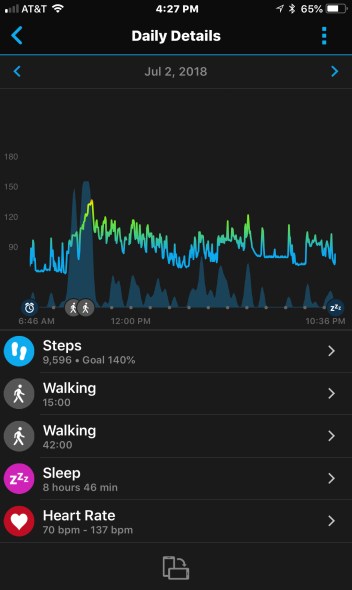
IMG_6673I have a Garmin Vivosmart HR that I use to track my activity. I’ve had some sort of tracking device for years, but it wasn’t until two summers ago that I started using this technology correctly.

I remember getting my very first FitBit. It was the kind you clipped to something. From the minute I first started seeing the numbers, I was hooked. Look at all of those steps. I took 1,000 steps yesterday. Woo hoo! Then, I logged 1,500 the next day. You go girl! The crazy thing is – I wasn’t really increasing my exercise level. I was merely cheering steps I would have taken anyway. Steps to the refrigerator were now exercise. Steps to the living room, a half marathon. Steps to the kitchen table, amazing stuff! Initially I was blown away by all of my “activity.” At the same time I couldn’t understand why I wasn’t seeing any results.

So I joined a group challenge called the “Workweek Hustle.” There were about a half dozen friends and family members in this challenge, competing to see who could log the most steps from Monday through Friday. I am a fairly competitive person so I thought this might be the way to really up my game. Yeah right, think again. I was competing against a nurse who worked 12 hour shifts, the owner of a nursery and garden center and one of my nieces who could seemingly spend hours on the treadmill without batting an eye. I got pummeled in the Workweek Hustle.

After reading several articles about fitness trackers and weight loss, I realized that I would benefit more if I didn’t just focus on number of steps, but also on stepping faster. Eric Finkelstein, Ph.D., lead author of a study on FitBit use, explained, “If you really want to get healthy, you have to engage in brisk walking or running—something sustained.”

Increased exercise needs to be paired with changes in diet to really help you lose weight and improve overall health, Finkelstein added. “You shouldn’t assume that all you need to do is buy one of these devices and suddenly your health is going to improve.” If it was only that easy, I would be at my goal by now. But it’s not. It’s work.   It’s sweat dripping from your forehead and down your back work. (At least that’s what it’s like for me.)

So now, with my Garmin and the Garmin Connect app on my phone, I track steps, intensity minutes, heart rate, floors and my weight. The Garmin Connect app syncs with MyFitnessPal, making adjustments to my available calories (when I exercise) so I know how many calories to consume during each day.

Weekly weigh-ins. I weigh once a week to check the progress to my goal. I try not to weigh more than once a week because the daily fluctuation drives me nuts. I try not to go longer than a week before stepping on the scale so that I can better manage any weight gain.

There are a lot of different ways to measure progress to a health goal. I just happen to use the scale.

Since we’re on the topic of the scale, it’s time to share my current status. As you probably already guessed after reading this post’s headline, I weigh 192.6 pounds. In a little over a year, I lost 37.4 pounds. My current body mass index (BMI) is 25.4 which classifies me as “overweight.” I’m no longer in the “obese” category.

What’s not working?
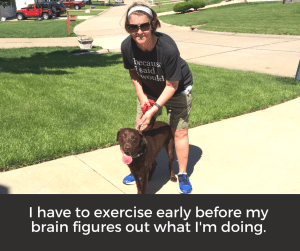
Random thoughts from the trail...Putting off exercise. I really don’t enjoy exercise. I’m not a runner. I’m not a fan of the gym. I’ve been fairly sedentary this past year. Consequently, knowing myself the way that I do, I try to knock out my cardio first thing in the morning. I look at it like ripping off a bandaid, pulling a tooth or blurting out the obvious. Putting off exercising creates a tortuous situation for me. I get this sense of dread. Anxiety. Eventually I start rationalizing why it makes more sense to exercise later in the day which leads me to not exercise at all. I’ll come up with some reason to NOT do it. It’s too hot. It might rain. It’s getting dark. I have to finish this other thing. I don’t want to miss this really important show on TV.  Eventually, I arrive at the granddaddy of all excuses, “It won’t matter if I miss one day of exercise.” Yikes! It’s that kind of thinking that got me where I am today. Overweight. Unhealthy. Every day matters. Every choice matters.


Completely eliminating high-calorie food I enjoy. There are times when I appear to have the palate of a pre-schooler. I love a good fruit snack, piece of candy or cupcake with sprinkles. While these items are not part of my regular food plan, I will occasionally enjoy one of these sweet treats. I log the calories and then make adjustments to my activity level in order to burn those calories.

For me to resolve to never eat another cupcake would be a ludicrous proposition. Get real. With this sweet tooth? Ain’t gonna happen. On my current plan, I can eat anything I want. I just need to account for it. I need to manage the cravings, be mindful of my choices and count the calories.

We’ve reached the finish line with this blog post!

As we reach the end of this post, my thoughts return to you. What are you working on this summer? Any goals you want to share? What challenges have you faced and how did you manage them?

The Importance of Balance as We Juggle Our Way Through Life

I can juggle. I picked up this now seemingly defunct talent when I was in college. No, I didn’t take a juggling class. One of my roommates taught me using three little bean bags. It actually was a fairly easy skill to pick up. And, it was fun.

A couple of other college friends learned to juggle, too. Occasionally, we would juggle together. We figured out how to do a few easy tricks – like passing the bean bags between two people. We would spend hours laughing and juggling – when we weren’t studying our brains out, of course.

FullSizeRenderI paid it forward through the years and taught others to juggle. I taught a few of my siblings. I taught a couple of high school students during a study hall at my first teaching post. These students took their talent to the stage at the school’s first talent show (pictured at left). They started with the bean bags and upped the ante. They juggled bowling pins and a bowling ball. It. Was. Amazing. They brought down the house.

I never tried to juggle a bowling ball. The idea of juggling something that big and heavy stressed me out. What if I dropped it? I might hurt myself. I might hurt others. I might hurt the bowling ball.

It’s been 30+ years since I tossed that first bean bag and guess what? I’m still juggling. You may not realize it, but you’re juggling, too. The balls we are working to keep in the air aren’t bean bags, though. These balls are things like family, friends, health, integrity and work.

When you first learn to juggle, you start with one item. Once you master one thing, you add one. Most folks become experts at tossing two items in a matter of minutes. It can take hours, days and even weeks for a newbie to feel confident with three. But once you’ve got three down, you can continue to add items, depending on your interest and comfort level.

That’s sort of how you learn to navigate life. Right? You start out with a single focus and as you get older, and gain more confidence, skill and experience, you start grabbing for more balls.

It isn’t always easy to keep these balls moving, especially when one of them becomes weightier than the others. We struggle. We do our best. Sometimes, we ask for help. On rare occasions, we check into the possibility of getting a smaller ball. More often than not, however, we deny the reality that it has become too much to handle and we just keep juggling.

Have you ever seen someone struggle to juggle? There’s actually a term for this. It’s called the “Jogging Juggler” syndrome.” He or she tosses a ball and it sort of goes forward a little bit. So the juggler runs in that direction in an effort to keep the ball from hitting the floor. And because the juggler is leaning in one direction it becomes next to impossible to make a course correction and toss the ball straight up. So now he or she is running again. The more the juggler runs, the more he or she sweats. And you, in your empathy, start sweating too. You want to help this poor juggler. Sometimes they will let you. They will quickly and temporarily toss a ball to you. Or they will ask for your advice or insight. How high should I throw that? Why did that one go so far to the right? Where is that ball?

But, there are those who will disavow the notion that they might be in trouble. And so you watch in semi-horror and bite your nails. Or, you cover your eyes because you know eventually a ball will drop and you can’t bear to see the juggler’s look of disappointment. The defeat.

out-of-balanceDuring the last 30+ years, there have been occasions when I have suffered from “Jogging Juggler” syndrome. During each instance, I wasn’t immediately aware if the syndrome was the result of bad technique or me selecting the wrong objects to juggle. I just know I was so out of whack that I was damn lucky I didn’t drop any balls.
What’s interesting is that in spite of the enormous and obvious chaos, stress and mess that the syndrome caused, I was one of the last people to realize I had it. I was the last to accept the diagnosis even though my family, friends and colleagues could see the tell tale signs (taken from “10 signs Your Work-Life Balance is Out of Whack.”)

  • You’re always too busy.
  • You’re always tired.
  • You’re out of shape.
  • Your desk is a mess.
  • You can’t unplug.
  • You’re a no show at social events.
  • You work 24/7.
  • You’re crabby with a capital C-R-A-B-B-Y.

In the real world, we don’t talk about people with the aforementioned symptoms as having “Jogging Juggler” syndrome. Let’s be real. The whole juggling thing was just a metaphor to get us to this point – where we discuss the real gist of this blog post – the significance of work-life balance.

According to Shawn M. Burn, Ph.D., professor of psychology at California Polytechnic State University at San Luis Obispo, “work-life balance is important because it affects the well-being of individuals, families, and communities. After all, people need time and energy to participate in family life, democracy, and community activities. They also need time outside of work for rejuvenation, and to develop and nurture friendships and their ‘non-work selves.'”

How one’s balance is structured may vary from person to person, depending on the individual and his or her preferences, background, family life, neighborhood, financial status, priorities, etc. But long story short, when we’re in balance, we’re happy and confident. We feel a sense of ease and harmony in our individual worlds.

That’s not to say it’s all rainbows and unicorns. There are always challenges and hardships in life. When we’re in balance, however, conflict can momentarily shake our foundation,  but we are able to course correct. We do so by asking for help. We pass a ball to a friend, a spouse a colleague. We prioritize. We make tough decisions. Sometimes reality demands that we drop a ball.

Bryon J. Dyson, former CEO of Coca Cola, gave a commencement speech at Georgia Tech in 1996. He began his address with his vision of balance and what happens when you drop a ball:

“Imagine life as a game in which you are juggling some five balls in the air. You name them – work, family, health, friends and spirit … and you’re keeping all of these in the air.

You will soon understand that work is a rubber ball. If you drop it, it will bounce back. But the other four balls – family, health, friends and spirit – are made of glass. If you drop one of these, they will be irrevocably scuffed, marked, nicked, damaged or evenshattered. They will never be the same. You must understand that and strive for balance in your life.”

You can revise this vision depending on your priorities and values, I suppose. If you love, love, love your work, for example, career might become one of your glass balls. The choice is yours.

Some people dispute the very notion of balance. They say it’s an elusive dream. It’s hogwash. A fairytale. A big fat lie. Don’t worry about it, they say. And certainly don’t strive to achieve it because you never will. It doesn’t exist, remember?

But here’s the deal: telling someone who feels overwhelmed by the responsibilities and people and life they are juggling, “There is no reason to feel overwhelmed,” is not helpful. (Spoiler alert: Dismissing a person’s feelings is never helpful.)

Moreover those who assert, “There is no such thing as balance,” exacerbate the problem for those who are struggling – by delegitimizing their feelings AND communicating a harsh untruth: You’re not unbalanced, you’re just less than. Less capable, less smart, less skilled.

When someone is struggling to juggle, we need to lend a hand, not toss another ball – or replace an already unmanageable ball with a bigger one. Do that, and we’re back to “Jogging Juggler” syndrome. We’re chasing MORE balls, our tails, pavements, rainbows, etc.

In defense of the nonbelievers, it has been my experience that they have a blindspot where balance is concerned. That blindspot occurs for one of three reasons: 1) They are rock stars when it comes to juggling. They can juggle multiple items, bowling balls, fire – you name it – they can juggle it. 2) They can compartmentalize when it comes to putting a ball down or dropping a ball. It’s just what has to happen. It’s not a sacrifice. It’s part of life. Next! 3) Their values are different from those who believe in the significance of balance – meaning balance just ain’t their thing.

One of the first steps in learning to juggle is to choose your items very carefully. Check the weight of the item. It shouldn’t be too heavy or too light. Consider its shape. Can you manage it?

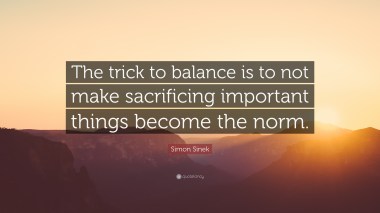
537721-Simon-Sinek-Quote-The-trick-to-balance-is-to-not-make-sacrificingChoosing items carefully is sort of the first step toward achieving balance in our lives, too. We review our priorities. We examine. We decide what will work for us and what will not. We weigh our skills, experience, abilities and VALUES against the requirements of meeting the needs and expectations of all that we’re juggling. The fact of the matter is, we all have different abilities and preferences when it comes to juggling. Some of us can juggle the bowling ball. Some of us can’t. Some of us want to try to juggle the bowling ball. Some of us don’t. It is important to note that achieving balance is not without some sacrifice. If you to choose to juggle a big career and family, for example, you probably need to sacrifice your longtime dream of becoming the next Food Network Star.
“The trick to balance is to not make sacrificing important things become the norm.” – Simon Sinek.

The privilege in the preceding is not lost on me. I fully understand that some people are handed the balls they are going to have to juggle. They don’t have a choice. They can’t find anyone who will help them. On the contrary, while they are juggling 24/7 they also have to guard against people who are swatting at their glass balls in the air. They have to figure out a way to steady themselves while others are pulling at the rug on which they are standing. They feel as though they are juggling bowling balls on a treadmill in a tornado. We have to figure out a way to lighten this load. To provide respite. To create opportunities. I’m clear about this.

A wise juggler once said that nobody ever teaches someone how to juggle; they simply show someone how to teach themselves. Through trial, error, training and example, I’ve learned how and what I’ll juggle. I’m guessing you have, too.

Some of us will juggle bowling balls. Some of us won’t.

If you ever need a hand with what your juggling, let me know. I’m happy to lend a hand.

So – what do you think about work-life balance? Do you agree with Dyson’s assertion that work is the rubber ball? Please share your thoughts in the comments!

Creating a Butter, I Mean Better, Me

A couple of weekends ago, we ate breakfast at the Waffle House. I love that place. Service is great. Staff is friendly and hospitable. Food is simple and delicious. I am especially enamored with the restaurant’s butter. It’s always soft and creamy and easy to spread on the pecan waffle that’s become my “usual.” Fortunately for me, our server that day gave me a couple of extra packets of my delicious friend. I used two of the three containers on my waffle, but had a full packet left. Much to the chagrin of my husband and son, I put the remaining treasure in my purse. I quickly defended my apparent lunacy. “You know how much I love this stuff, don’t you? It wouldn’t be right to waste it. Never mind the people who are watching me treat this butter like a pallet of gold. They don’t know what they are missing. I feel sorry for them.”

I completely forgot about the butter for a couple of days until I was dining out with a couple of girlfriends. I recall reaching for my wallet when the butter fell out of my purse. I explained my good fortune to my gal pals, but instead of nodding in agreement, they just laughed. I’m not sure if they were laughing at me or with me. Hmmm. Anyway, when I returned home from dinner I put the butter in the refrigerator. Fast-forward to a few days later when I went to retrieve the butter packet from our refrigerator only to discover it was no longer there. I asked my husband, Jeff, about it and he coldly answered, “I probably threw it away.” Threw it away? Threw it away? How could you throw it away? I could fill the heat rising up my neck and into my face as my anger and disbelief grew. No apology was going to fix this. My butter was gone. Trashed. Destroyed. Ruined.

After a few minutes of fuming and pacing, I realized how ridiculous it would be to come to blows over a pat of butter.

Ridiculous, but not necessarily surprising. You see, I’ve always had a weird relationship with food. Always.

This weird relationship has led to a lifelong struggle with my weight. And my weight appears to be winning.

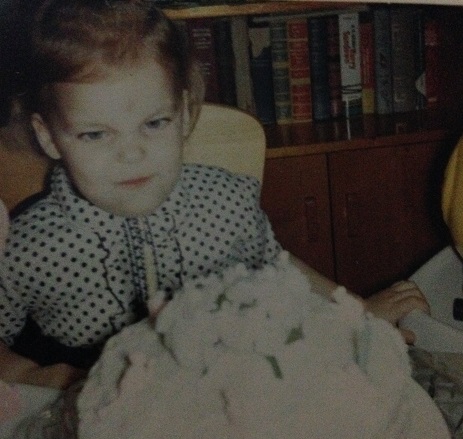
Do I look like I'm about to share this cake with anyone?
Do I look like I’m about to share this cake with anyone?
The evidence supports my assertion. And the evidence is strong. Let’s take a look:

Exhibit A: I was born with a tooth. So from day one I was ready for more than 6 ounces of formula. I was primed for something I could really sink my tooth into – which brings me to Exhibit B.

Exhibit B: My parents say that I seemed to have an insatiable appetite. I cried incessantly. I was inconsolable. They couldn’t figure it out. So they went to the expert. They asked my pediatrician. He determined that I wasn’t getting enough to eat. He instructed them to put ground up meat in a bottle for me. (I’m not sure if that image makes me queasy or want to make a Taco Bell run.)

Exhibit C: See the sentence in the parentheses in Exhibit B. (Sick, right?)

Exhibit D: I currently weight 230 pounds. I visited the Centers for Disease Control and Prevention website inserted my numbers into their BMI calculator widget. The verdict was sobering. “Your BMI is 30.3, indicating your weight is in the Obese category for adults of your height.”

Exhibit E: I am the first-born female in my family. According to a recent study, that means I am 40 percent more likely than my younger siblings to be obese. “We can’t do anything about our birth order, but the research could be considered a good reminder for first-borns to be scrupulous about diet and exercise,” says Wayne Cutfield, co-author of the study, which was published in The Journal of Epidemiology & Community Health.

So I guess I’m screwed. Or, maybe my scale is screwed. I sometimes imagine it yelling at me. “Get oooooooff!” “Ouch!” “I can’t breathe!”

dietOK, so she’s not screwed, you’re thinking to yourself. She can fix this. She just needs to lose some weight. I absolutely agree with you. I need to put down the Nutty Bars and Double Stuf Oreos. I need to bypass the QuikTrip and its 5 cent Tootsie Roll bin. I need to exercise more and spend less time lying around watching Netflix and Law and Order reruns.

But here’s the deal – the problem isn’t my inability to lose weight. Oh, I can drop the pounds like nobody’s business. I’ve probably lost 100s of pounds over my professional dieting career. I’ve done them all. I’ve done the cabbage soup diet. I’ve done the Whole 30. Atkins. South Beach. 17 Day. Weight Watchers. I’ve achieved Weight Watchers’ lifetime member status at least twice. I did some weird hot dog and banana diet. I’ve prayed, meditated, screamed. No matter the diet, eating plan or program, the end result has always been the same. I gain the weight back and then some. I lose that 50 and raise you 75 pounds.

For awhile I didn’t get it. I mean, every time I would lose weight, I would promise myself I would never gain the weight again. I would slide under 200 pounds and pinky swear I would never see 200 again. I would hit 189 and wave adios to 190. And on and on and on. But here’s the thing, once I hit that magic goal weight – I could never maintain it. Little by little, bite by bite, the pounds would creep back on.

I consoled myself with a cupcake with buttercream frosting and by recalling a data point I’d read sometime, somewhere that said 95 percent of people who lose weight regain it – and sometimes more – within a few months or a few years. 95 percent. Geez, at least I was in good company, right? Cheers to the 95 percent!

For whatever reason, I recently researched the validity of the 95 percent and found a New York Times article spoke to this statistic “that has been quoted widely over the last four decades, in Congressional hearings, diet books, research papers and seminars.” The article asserted, this statistic “is the reason so many people approach dieting with a sense of hopelessness.” Hopelessness. Check.

The article went on to say, however, that “no one has any idea how many people can lose weight and keep it off” because that 95 percent figure is based on a 1959 clinical study of only 100 people.

Unfortunately for me and other long-term dieters, the physicians and researchers interviewed for the article who had new information about dieting success said there is no “magic-bullet solution” for weight loss. Instead, the experts maintained, successful dieters simply eat less and healthier food and exercise regularly. In other words, they work at it.

decideIn addition, the article shared, two researchers, studying long-term dieters, found that about half the people who maintained a substantial weight loss for more than a year had done it on their own. On. Their. Own. No plan. No program. No lists. No points. These folks exercised, chose to eat foods based on their nutritional value and calories and as a result they lost weight.

The stories I read about people who managed their own journeys to healthier eating and living detailed the exact points in time they decided to cut the crap. None of these aha moments were particularly compelling or dramatic. They will not be the subject of a Lifetime movie, nor will they likely grace the pages of that special weight-loss edition of People magazine. Nevertheless, the bottom line is quite powerful. And here it is, the bottom line. Are you ready? These formerly overweight folks chose health over junk. An apple over high blood pressure and type 2 diabetes. Daily exercise over huffing and puffing while walking up a flight of stairs. A lower BMI over Waffle House butter.

It wasn’t easy for them and it won’t be easy for me as I embark on my own journey to improved health. It’s got to be better though – better than the feeling of not being able to fit into 75 percent of your wardrobe. Better than the remorse that follows binge-eating chips and guacamole. Better than failing your 14-year-old son by settling for something less than you deserve, by giving up or by not doing the work necessary to meet a goal. Better than starting a ridiculous fight with my husband over a pat of butter.

I’d love to hear from you! What is something you would like to change or what is a goal you’d like to set for yourself? How will you get there?


Playing My Cards Right

fullsizerender-11Take a look at the picture on the left and tell me what you see. A beautiful stack of greeting cards, right? That’s what I see, too.
A couple of weeks ago, my husband, Jeff, saw me sitting at the table with said stack of greeting cards and shook his head. He didn’t say anything mind you, but sometimes body language speaks louder than words. Believe me, I heard his head shake loud and clear. The implication was that I have a problem.

Full disclosure, the head shake could have been directed at any number of things. Perhaps it was meant for our crazy dog, Moose, who can’t seem to get a drink from his bowl without proceeding to water the entire kitchen floor. It’s like his mouth is numb from some kind of canine dental treatment. The water just flows off the edges of his gums. Or maybe the head shake was Cardinals, Rams or Blues related. Jeff is a huge fan of all things St. Louis sports. So maybe the head shake was because the Cardinals didn’t make the playoffs. It’s possible. I don’t really know. I didn’t even ask. I just assumed it was meant for me.

And if it was meant for me, it might have been warranted. You see, I have A LOT of greeting cards. I don’t know exactly how many I have. Let’s just say that the above photo shows a fraction of my inventory. Let’s also just say that I probably shouldn’t buy another birthday card this year. Probably shouldn’t buy a thank you card, either. Or, a “Just for Fun” card. Or, a “I’m Thinking of You” card. Or a “Blank Card.” Or a card of “Encouragement.” But I know myself pretty well. I will buy more cards. I will add to the pile.

In my defense, I buy my cards at Trader Joe’s. If you’ve ever perused the greeting cards at Trader Joe’s, you probably understand my obsession. They are beautiful. They are unique. And, they are 99 cents each! Are you kidding me? It’s one of those deals I just can’t refuse. Ever. Never.

In fact, each time I make the trek to Trader Joe’s, I buy more cards. I could be running in for a bottle of three buck Chuck and a box of Joe Joe’s and you know I will snatch up a couple of greeting cards at the checkout. I can’t help it.

It. Just. Happens.

letter-writingIt just happens because I love to send hand-written notes in beautiful greeting cards. And I want to make sure when I’m sending a card that it assists in accurately and adequately communicating my thoughts, feelings and intentions. In order to accomplish the preceding, I must have the right cards for all possible occasions. The image on the front has to be right. The words on the front have to be right. The words on the inside have to be right.
I have made a few mistakes when purchasing cards. Consequently, some cards at the bottom of the pile have been in my collection for years. For example, I have a blank card that has a gorgeous monarch butterfly on the outside. The following quote frames the picture, “Just when the caterpillar thought its world was ending, it blossomed into a Butterfly.” I loved this card when I initially purchased it. However, every time I reach for it, I return it to the pile. I worry what the recipient might think I’m implying. Will the recipient think he or she is a caterpillar? That they have yet to blossom? That their world is ending? My intention might be to send a word of encouragement and the end result could be to offend or frighten. So, yeah, I haven’t used the caterpillar card yet.

You can’t tell by looking at the pile, but in the last few months I’ve mailed a lot of cards. Sadly, the majority have been of the sympathy variety. The sympathy card, in my mind, is the most important card to get right. It also appears to be the one that most greeting card manufacturers get wrong the majority of the time.

The last time I looked for a sympathy card, I ended up purchasing a blank card because the sympathy cards’ messages were definitely not right. One said something about the spirit of the deceased loved one living on in everyone’s hearts. Another urged “be strong” and “this will pass with time.” And then there was the cheesy and thoughtless “when someone you love becomes a memory the memory becomes a treasure.” What does that even mean?

My perspective around sympathy cards has been shaped in large part by my experience more than 20 years ago when my brother, David, died.

David’s death came a little more than a year after a cancer diagnosis and months of treatment to include intensive chemotherapy, a double bone marrow transplant and radiation. About 10 months following his diagnosis, testing and scans revealed David was cancer-free. But the cancer came back.

David was young, happily married and a father of two young girls at the time of his death.

I empathize with those who came to pay their respects at David’s visitation and funeral. I know they were looking for just the right words to make everything better. So were the kind folks who sent sympathy cards. This may sound crazy – especially coming from a writer – but there were no words that could have made things better. None. Not “I know how you feel.” Not “he’s in a better place.” Not “he’s no longer in pain.” And not “time heals all wounds.”

The only message that resonated with me at that time was, “This really sucks.” And, I don’t think you could have found that missive in a greeting card.

So I buy blank cards to send to family and friends who have experienced the death of a loved one. I write my own message. That message is simple. I care. I’m really sorry. And if merited, I add, “This really sucks.”

Want to read more about the “Art of Condolence?” Click here for more.


A Monday Memory: The Silver Lining

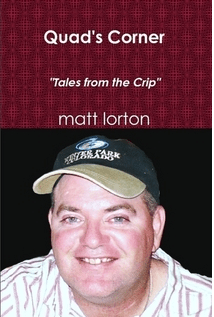
(Editor’s Note: In 2011, Matt Lorton realized a longtime dream. He published a book he called, “Quad’s Corner: Tales from the Crip.” I was humbled and honored to be offered a small, supporting role in this dream when Matt asked me to write the foreward. Sadly, not too long after the book was published, Matt died. Shortly before his passing, while attending a play at The Muny, Matt marveled at the size of the audience and was said to have wished he could one day reach a crowd of that magnitude. What Matt never knew – was that his reach far exceeded that of The Muny. Moreover, Matt continues to positively impact people with his humor, his example and his compassion – to this day. Before I share the foreward and a little bit more about Matt with you, I have a few words I’d like to share with my cousin. Matt – thank you for always making me think a little harder, believe a little more faithfully and laugh a lot louder. I love you.)

At one time or another during our lives, we’ve encountered some conflict, problem, or hardship. And our friends and family members try to pump us up with the usual suspects – those go get ‘em mantras that may read a little differently but all basically mean the same thing. You know what I’m talking about – things like – “When life hands you lemons, make lemonade.” “The glass is half full.” “Whenever God closes a door, he opens a window.” “In every cloud there’s a silver lining.”

I don’t know the efficacy of these little bits of wisdom. And despite their prevalence, I have to admit that I don’t know a lot of people who actually embody such positive energy on a daily basis. I don’t know many individuals who live by the preceding mantras – who ponder their significance beyond the time spent confronting conflicts, problems, or hardships.

And then again, there is my cousin – the author of this book – Matt Lorton. Positive energy personified – Matt is the man running the lemonade stand. He’s the guy who makes sure all of the glasses are half full. Matt is the guy who ignores the closed door and heads straight for the window. Matt is the silver lining.

Fortunately for us, that silver lining has chosen to share some of his pearls of wisdom, his sense of humor, his life, his trials, and his victories in this book. Moreover, I have the honor of writing this foreword – or introducing his book to you. But first, I need to acquaint you with my cousin. Because before you turn to the real page one, there are a few things you need to know.

Matt is about 46 years old. He is married and has five daughters. He has a very large extended family and circle of friends. Matt is a beloved member of the Calhoun County, Illinois, community where he was born, raised, and continues to make his home.

Life has not been a bed of roses for this good-natured man. He’s survived major floods as a neighbor of the Illinois River. He buried a parent. And did I mention he lives in a house with six women?

Seriously though, in 1999 Matt broke his neck in the family’s backyard pool. His wife, Lisa, saw it all unfold from the sun porch. While Lisa was nursing their youngest and looking on, Matt was splashing around with friends and his four older daughters. The swimmers taking turns jumping over a raft. When it was Matt’s turn, inexplicably, his foot got caught on the edge of the raft, flipping him forward and shooting him forcefully to the bottom of the pool. In that moment of laughter and splashing and fun – Matt became a quadriplegic.

I will leave it to Matt to share this event in more detail, but suffice it to say, his life was changed forever. Or was it? I’m not really sure. Because as unbelievable as it might sound, Matt has never been bitter, depressed, or angry about his circumstance. Matt has never needed someone to tell him about the silver lining. Nor did he need directions to the open window. Matt already knew all of that and didn’t forget it when he lost feeling from the neck down.

quads cornerMatt has taken on what life has handed him with enthusiasm, creativity, grace, and a sense of humor. Fortunately for avid readers like you and me, he’s written about it. Prior to his accident, Matt had accumulated over 25 years of experience in the construction and real estate development businesses. Following his accident, initially, rehabilitation became Matt’s life’s work. After two years of physical therapy, however, Matt and Lisa made an important decision, “We either rehab for the rest of our lives or get on with life.” They got on with life. For Lisa – that meant returning to full time nursing. For Matt – that meant returning to school. After earning a B.S. in Organizational Leadership, Matt went on to receive a Master’s in Communications.


While studying, working, and helping to raise his family, Matt also found time to share his experience with other accident victims. He was often called on to be a peer counselor – providing the kind of support no one else could offer to someone recently hurt in an accident and finding themselves in a similar position as Matt. He also spoke to medical students. In addition, he happily obliged when TV stations came calling right before the summer swim season opened – as they looked for people to interview for swimming pool safety stories.

Getting on with life didn’t stop there. Matt and Lisa formed a company – Life Assist Unlimited. Matt became an Americans with Disabilities Act specialist. He started to do more public speaking. He still enjoys talking to schools, churches, service clubs – anyone really – about change, about people with disabilities – about the importance of focusing on what you can do in the world.

Matt is a story teller by nature. He comes from a long line of story tellers. His father, my father, our grandfather – they all had this innate ability to make the most mundane seem exciting and compelling. Family get-togethers were never complete unless there was time spent sitting around the kitchen table listening to one of our elders talk about surviving life in the city on a diet of bologna, bread, and ketchup.

Matt is also quite funny. Again – I think it’s genetic. I’m convinced of it. What’s more, I’m going to go out on a limb and hypothesize that not only has the sense of humor gene not skipped a single generation in the Lorton family, it has somehow multiplied or become magnified in quite a few family members. They are funny, funny people. And I am not exaggerating when I tell you that it is virtually impossible to escape the company of a Lorton without hearing these words, “Did I tell you the one about the…?”

With all of that being said, it should come as no surprise that not too long after Matt’s accident, he started a regular e-mail column which he calls “Quad’s Corner.” Over the years his recipient list has grown from a few friends to literally hundreds of people. In his column, Matt reflects on his life, on all of our lives. He mixes humor with his common sense point of view to share his thoughts on politics, religion, and the challenges of his daily life.

Matt talks about his first time behind the wheel of this equipped van. He talks about the nightmare of having mechanical difficulties (with his wheelchair) while at the supposed “happiest place on earth” – Disney World. He talks about friends in need of prayers. He talks about his family and friends. He talks about his dog, Jake, and his run for the mayor’s post.

In an effort to show it all – and to be completely authentic and honest – Matt dispels the myth of TMI – too much information. Matt talks about needing help to use the bathroom and to get dressed in the morning. He talks about the assistants who see him when he is most vulnerable. No stone goes unturned, as they say.

This book is a compilation of all of those stones. This is a collection of Matt’s “Quad’s Corners.”

To have Matt’s writings reach this stage is the realization of a longtime dream. He’s always talked about publishing the “Quad’s Corners.” I never doubted for a minute that it would happen. When Matt says he thinks he can do something – he can – and he does. I’m privileged to play a small role in seeing this dream come to fruition.

Part of that role is to relate one more important piece of information. In the publisher’s effort to support Matt’s authentic self, the “Quad’s Corners” are printed exactly as they appeared in their original form. No one edited for typos or weeded out the grammatical errors.

I applaud the publisher for taking this tack. Because in my mind, these things, that might look like critical missteps by the English major, are things of beauty. Moreover, without them, we’d not know the entire story. Removing the typos would be like removing a few random pages from any book or like reading the CliffsNotes version of this one. In this book – it’s all of it together – the content and the context – that combine to deliver the message. In this case, the content is the story Matt is telling and the context is that when Matt is drafting a column, he literally forces a pencil into his curled hand and uses what little upper body strength and muscle that he might have to throw his hands toward the keyboard.

What we get from his genius and unrelenting self is a gift. And I don’t know about you but I want it all. I want the note, the wrapping paper and what’s inside – even though I already know a little bit about the contents – it’s got a beautiful silver lining.

(Final note – you can find Matt’s book by clicking here.)

Humans of Wherever

humans of nyI love Humans of New York (HONY). Initiated in the summer of 2010 by Brandon Stanton, HONY is a photoblog and bestselling book featuring pictures and interviews with people of New York City. According to Stanton, he started HONY because he “thought it would be really cool to create an exhaustive catalogue of New York City’s inhabitants.” His initial goal was to photograph 10,000 New Yorkers and plot their photos on a map.

“Somewhere along the way, I began to interview my subjects in addition to photographing them. And alongside their portraits, I’d include quotes and short stories from their lives,” Stanton explains, adding, “Taken together, these portraits and captions became the subject of a vibrant blog. HONY now has over ten million followers on social media, and provides a worldwide audience with daily glimpses into the lives of strangers on the streets of New York City.”

The pictures are beautiful. The copy, which is generally just a couple of sentences, is powerfully honest and often emotion evoking.

HONY is compelling, relatable and revealing. And some how, some way, HONY seems to really bring out the best in the people who follow it.

I follow HONY on Facebook. Not long ago, there was a picture and interview with a young man who reminisced about his deceased father. This young man shared that he didn’t have a close relationship with his dad because while the family had routines, they never really had conversations. He added, “During the last year of (my dad’s life), when he was really sick, he played solitaire in his office for six hours a day. My main memory of him is his silhouette reflecting off the wall of the corridor by the light of his computer screen.” There are more than 1,300 comments in response to this single post.  For the most part, the comments seek to reassure. They are filled with compassion and encouragement.  Someone named Ry Runge, for example, posted, “I’m sure he loved you more than you will ever know.” And yet another person commented, “Sorry for your pain.”

For this post and almost every HONY post, the comments are a validation, of sorts. The comments let the profiled person know: I see you. I hear you. I care about you.

The pictures and interviews by themselves are amazing. But when combined with the frank and sensitive comments left by fellow humans, the photoblog in its entirety is really a thing of beauty.

I know there are bigger stories around HONY. There is the picture and interview with a young student that inspired the $1.4 million fundraising campaign for his Brooklyn Middle School. I’m also aware of Humans of St. Louis and a related story of a community pulling together to support a family that is working to restore a dilapidated home. But it’s the more personal and tender moments that have captured my attention. I’m not sure why.

quoteWhat I do know is that we all too frequently focus on what’s wrong with the world, our communities and ourselves. It’s uplifting to see such positive and tender interactions between humans.

I’ll also assert that through HONY, Stanton reminds us of our capacity to support and encourage our fellow humans and he fosters opportunities to demonstrate that capacity via “Likes,” “Comments,” and “Shares.” As Humans of Wherever, we have been afforded that same opportunity. It’s up to us to take advantage of it.

Beginning at the End

This blog has been 51 years in the making. OK – so that’s a bit of an exaggeration. But it sure feels like I’ve spent a lifetime talking about writing something – anything. And I’m sure for my family and friends, it feels like a lifetime of encouraging me to write something – anything.

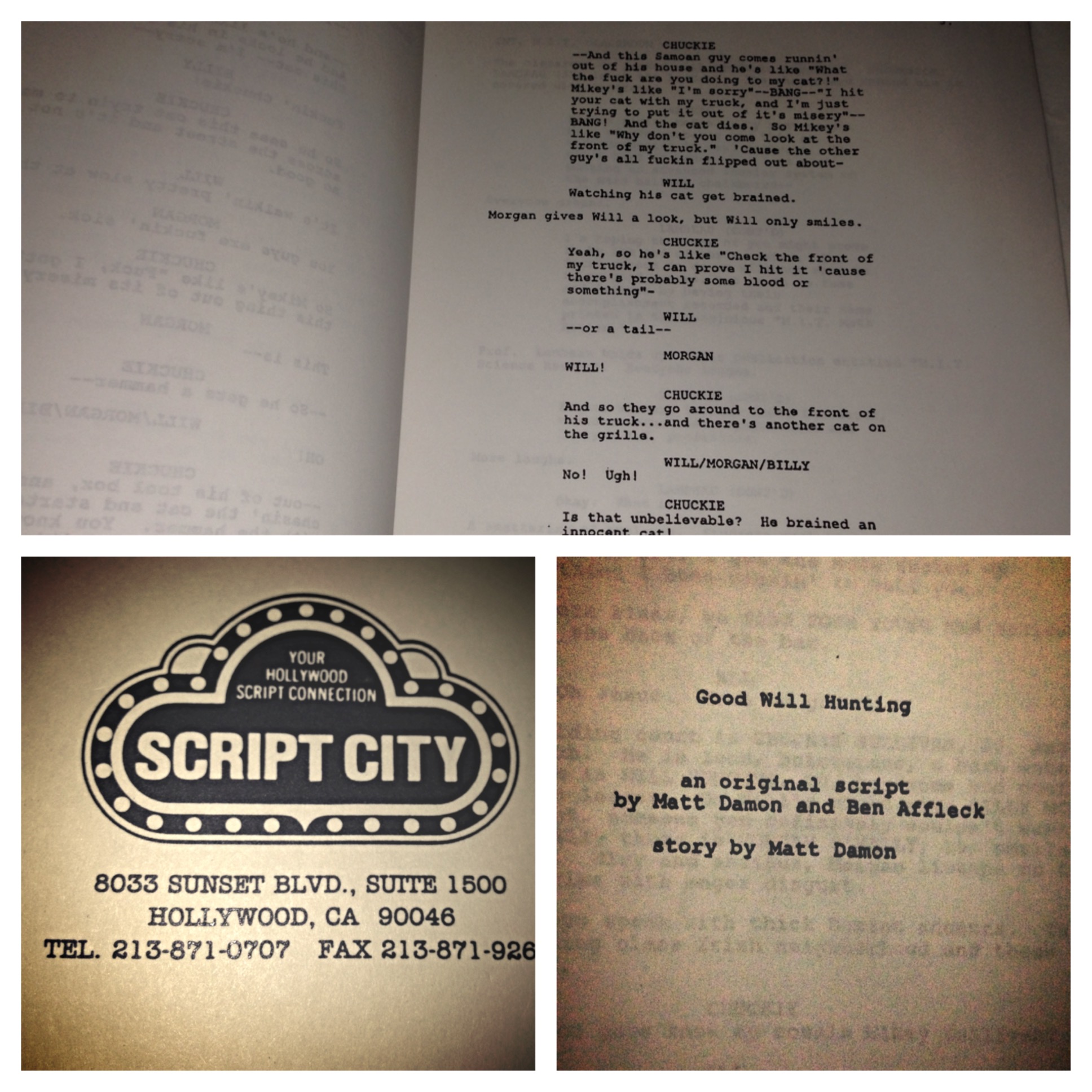
But until now, I could never seem to get beyond organizing concepts in my head. I had all sorts of ideas. Great ideas. Amazing ideas. And I was always inspired. That song. That favorite movie. That famous quote. I can’t tell you the number of times I left a movie theater, determined to write the next Academy Award-winning screenplay. I remember actually telling myself I could be the next Ben Affleck or Matt Damon. In the very late 1990s, in fact, I researched and found a place that sold real screenplays. I bought a copy of Good Will Hunting. I told myself that if I could see the structure of this award-winning piece, THAT would be the key to me being able to write my screenplay.

The screenplay - Good Will Hunting.
The screenplay – Good Will Hunting.

It never happened. I never made it happen.

I started several times. I never finished. I have the first 50-some pages of a screenplay on a disk somewhere. I launched two previous blogs. I can’t tell you the name of either blog – nor do I remember my sign in name or password to get back to them. I also have the first part of a book started by one of my brothers. The original thought was we’d pass it back and forth – each writing a few chapters. I don’t think I added a single line. Pretty lame. I know.

But, in my defense, I had ALL of the best excuses:

  • There just wasn’t enough time.
  • I needed to flesh out my ideas a little further.
  • I’d get to it – later.
  • And then there was the very best excuse: I write for a living – I don’t want to spend my free time sitting at the computer – writing.

Are you kidding me?

The real truth to why I never wrote the big masterpiece was because I was afraid. Afraid of failure. Afraid of mediocrity. Afraid of offending someone. Afraid of being misunderstood.  Despite everyone’s best efforts to buoy my confidence and cheer me on to greatness – I couldn’t fully get over this paralyzing fear. I doubted my ability to make it happen.

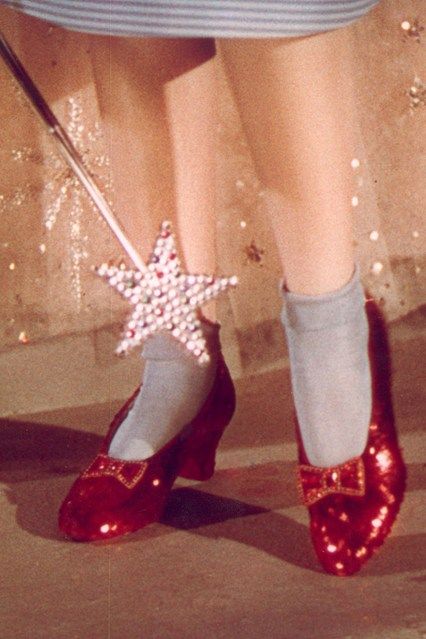
ruby slippersI guess that’s how these things go sometimes, right? We’re often the last ones to know or to acknowledge what everyone else can plainly see – we can do it. It’s like Dorothy in the Wizard of Oz. It took battling the wicked witch and those crazy flying monkeys before she got to the heart of the matter –  she had the ability within herself all along to get to where she wanted to go.

So – here I am pounding out my first blog post in sweats and a t-shirt – sans ruby slippers.

I’ve named this blog, “Life After Ted,” in honor of Fr. Theodore Hesburgh. Fr. Ted died late Thursday, Feb. 26. At 97 years of age, a man who had served several presidents, popes, foundations, international commissions and the University of Notre Dame, passed away. He was a widely known and beloved public figure. Beloved by many because he loved everyone so deeply and shared his mind, heart and faith so fearlessly.

"Fr. Ted Hesburgh in his Office at the University of Notre Dame" by Know1one1 - Own work. Licensed under CC BY-SA 3.0 via Wikimedia Commons - http://commons.wikimedia.org/wiki/File:Fr._Ted_Hesburgh_in_his_Office_at_the_University_of_Notre_Dame.JPG#mediaviewer/File:Fr._Ted_Hesburgh_in_his_Office_at_the_University_of_Notre_Dame.JPG
“Fr. Ted Hesburgh in his Office at the University of Notre Dame” by Know1one1 – Own work. Licensed under CC BY-SA 3.0 via Wikimedia Commons – http://commons.wikimedia.org/wiki/File:Fr._Ted_Hesburgh_in_his_Office_at_the_University_of_Notre_Dame.JPG#mediaviewer/File:Fr._Ted_Hesburgh_in_his_Office_at_the_University_of_Notre_Dame.JPG

On facing one’s fears, Fr. Ted once suggested, “Don’t, be afraid of life. Don’t be afraid of people. Don’t be afraid of yourself. Don’t be afraid of God. Fear of God is something that is respectful that we are so low and He is so high. But fear is not what He talked about. When you go through the Gospels, you have an awful lot of things in the Gospel about love and about caring and about being thoughtful and generous and kind and good. But I think you find very, very little about fear. And that’s a good thing.”

Fr. Ted encouraged everyone to give the gift of themselves. I am sorry that it took so many years for me to finally heed this urging.

And so I dedicate this blog to Fr. Ted and to the many other courageous and now heavenly heroes who gave the gift of themselves so fearlessly, including my brother, David; my godfather – my Uncle George; my Granny and Grandpa Tripp; my Grandma and Grandpa; my Uncle Don; and my cousin, Matt; among many others.

I close this initial post with one of Fr. Ted’s prayers, “Lord, give us the ambition to do as much as we can, as well as we can, as long as we can, and the resolve not to despair over the things we cannot do. Amen.”