
I was waiting in line at a drive-thru restaurant yesterday morning, after waiting in line at the bank, and suddenly it occurred to me, I spend a lot of time waiting in line. Or so it seemed. Curious – I pulled out my phone and Googled, “How much time do people spend waiting in line?”
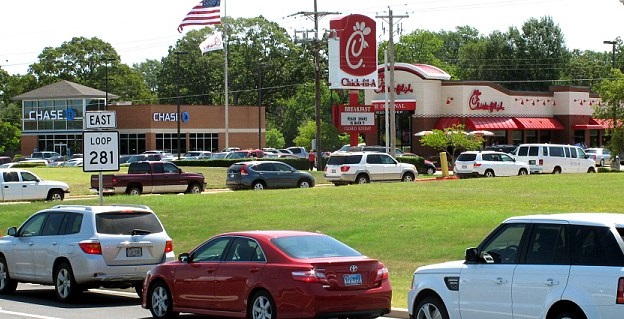
I was stunned when I read that over the course of a lifetime, the average American will spend TWO years waiting in line. TWO YEARS. Americans as a whole spend roughly 37 BILLION hours each year waiting in line. Mind blowing, isn’t it?
More surprising than the numbers though, was the discovery of M.I.T. operations researcher, Richard Larson. According to an article I read in the New York Times, “Why Waiting in Line is Torture,” Larson is widely considered to be the foremost expert on lines. Did you know there was an expert on lines? I didn’t.
There appears to be an entire science around lines. I guess that’s not all that astounding given today’s culture. We live in a microwave society. We want what we want and we want it now. We order our lunch from the company who promises a “freaky fast” delivery. We download the Waze app to save time on our daily commute. We pay extra for “express boarding” when we travel by air. We read stories like, “Why Waiting in Line is Torture,” hoping the moral of the story will reveal some new trick for avoiding lines. We don’t want to wait. Not in line. Not online.
As a matter of fact, according to computer scientist Ramesh Sitaraman, waiting of any sort can mean high anxiety for Internet users. Sitaraman’s research found that two seconds is the longest we’ll wait for an online video to load before we start looking at our watches. If we have to wait 10 seconds, 50 percent of us are going to bail. Apparently, we can’t spare that kind of time.
Why do we hate waiting in line so much? For the answer to that question, we return to the line expert, Professor Larson. He explained, in an article in The Huffington Post, “The Hidden Joy of Waiting in Line,” that occupied time feels shorter than unoccupied time, so when we’re standing in a long line or in a doctor’s office waiting room, the time feels as if it’s dragging on. Waiting can provoke impatience, stress and anxiety, and in turn, anxiety also makes waits seem longer.
“The dominant cost of waiting is an emotional one: stress, boredom, that nagging sensation that one’s life is slipping away,” Alex Stone wrote in the New York Times in 2012.
Apparently, the mere presence of a line can freak people out. So it stands to reason that multiple lines can really push people over the edge, right? That statement is true – but not for the reason you might think. The presence of multiple parallel lines, like the ones we see in the grocery store, create an anxiety because we are pressured to pick the right one – the line that will get us through the checkout and out of the door the quickest.
 We’ve all been there. I was there last weekend. Pressed for time, I was trying to get in and out of Costco in rapid fashion. I was doing a fantastic job, until I reached the checkout area and had to decide on a line. Before I could choose, there were several factors I needed to consider: the number of people in each line, the quantity of items in each cart, and the chattiness of the employees. Once I selected my line, I then spent the rest of my time waiting, comparing my wait to those in the adjacent lines. Am I beating that line? Am I losing to that one? I can probably beat all of the lines as long as nothing unforeseen happens – like a price check.
Weirdly, I don’t remember if I won or lost, because at the end of my shopping experience, the clerk helped me find a box to carry all of my purchases and a couple of my items rang up at lower prices than I anticipated. According to the line experts, my inability to remember the details of the race wasn’t so weird. The experts assert that when a long wait ends positively, we tend to forget all about the trauma of waiting. The reverse is true as well. If our experience ends on a down note, we will fixate on that negative story even if the whole process wasn’t that bad.
We’ve all been there, too, haven’t we? I remember not too long ago running into the post office to mail a few packages for work. I had a pile of brightly colored boxes I was sending to some folks who’d helped me out with a video shoot. The line moved quickly and the clerk was quite pleasant and helpful. When it was time to pay I handed the clerk my credit card, he processed my payment, returned the card and then mispronounced my last name. Instead of Daum he said Dum. Game over.
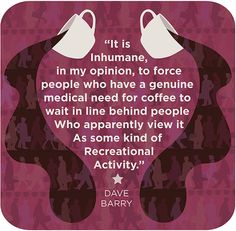 One of the biggest factors in how we perceive our line waiting experience boils down to fairness. It goes without saying (but I have to say it here because this is a blog and this is where I say stuff), the first one to get in line is the first one to be served. Anyone who colors outside of the lines of first come, first served, is asking for trouble. Isn’t one of the earliest rules we all learn when it comes to line etiquette is that there are no cuts?
These new drive-thru lines, that split in two and then converge into one, sometimes make the first come, first served rule a challenge. Just last week I was sitting in a line ahead of the split and some guy drove next to me, almost on the sidewalk, and maneuvered ahead in one of the lines. I had this “Fried Green Tomatoes” moment flash in my head where I drove my little Prius into the side of his Escalade. Thankfully that inclination left as quickly as it came and I maintained my composure.
But maintaining one’s composure when someone cuts in line is easier said than done for some folks. There’s an ABC 20/20 piece about “line rage” that showcases throwdowns in the men’s room at a professional sporting event, at an Apple new product unveiling and a convenience store. There’s actual footage of a woman getting so enraged when a guy tries to cut in front of her to buy cigarettes that she maces him. Google “muffin macer” and you can find that stress-filled encounter starring two adults behaving poorly.
Helping people avoid these kinds of experiences and the stress of lines are professional line sitters. Robert Samuel launched SOLD (Same Ole Line Dudes) in 2013 in New York. Samuel makes a living sitting in line for everything from Saturday Night Live tickets to cronuts. He charges $60 to wait in line and then deliver two ($5/each) cronuts to customers who don’t want to wait in crazy long lines at Soho’s Dominique Ansel Bakery.

And then, there’s Alex Backer. Backer is co-founder and CEO of QLess.
Operating on the principle that “waiting in line sucks,” QLess aims to “eliminate waiting in line from the face of the earth.” QLess is based in Los Angeles, which I suppose makes a lot of sense. If your mission is to eliminate lines you headquarter where there are a lot of people and a lot of lines, right?
Founded in 2007, QLess offers a technology that holds your spot in a virtual line and notifies you on your mobile phone when it’s your turn. According to QLess, the company “has a proven track record at Fortune 100 retail stores such as T-Mobile, Vodafone & Harrah’s, government offices such as Kansas, Missouri and New Hampshire DMVs or the City of Austin, restaurants such as Twin Peaks, and healthcare providers such as the Cleveland Clinic.”
I don’t know about you, but I don’t have the resources to pay other people or technology to wait in line for me. Instead, I’m just going to have to suck it up, act like an adult and make the best of waiting. Spoiler alert – so are you.
P.S. My Google search turned some other interesting facts I thought about using in a later blog post – but hey – why make you wait? From the website Distractify, I found the following interesting tidbits about how we spend our time. (Disclaimer: I have no idea how accurate any of these things are. I just found them interesting.)
- We watch TV for 9.1 years.
- We spend two years watching commercials.
- Women spend 17 years of their lives trying to lose weight.
- We spend 92 days on the toilet.
- We spend 25 years sleeping.
 Life After Ted
Wow! Two years waiting in line??? Thats amazing
LikeLiked by 1 person
I guess that explains, in part, why we get so stressed out about it. Thanks for reading and commenting!
LikeLike
Also, if you look into say spending 10 minutes in the bathroom daily at work it equates to roughly 43 hours a year not working…. or a weeks vacation….
(260[days a year for work]*10[minutes per day])/60[minutes per hour]=43.333333333333333333[hours per year]
LikeLiked by 1 person
So, uh…We each of us annually takes a week’s vacation in the john at work! How depressing…but funny!
LikeLiked by 1 person
Do you ever wonder who sits around and figures these things out? And in this case, where do they sit? 🙂
LikeLike